A Father's Day Twofer
Next Sunday (June 18) is Father's Day. I would be remiss if I didn't suggest a couple of titles you might consider for dear old dad. The first is my newly-released The Secrets of Master Brewers, which is ostensibly a homebrew book. In fact, it's great for anyone who has a deep interest in understanding the beer traditions of the world.
Read More
Key Moments in History
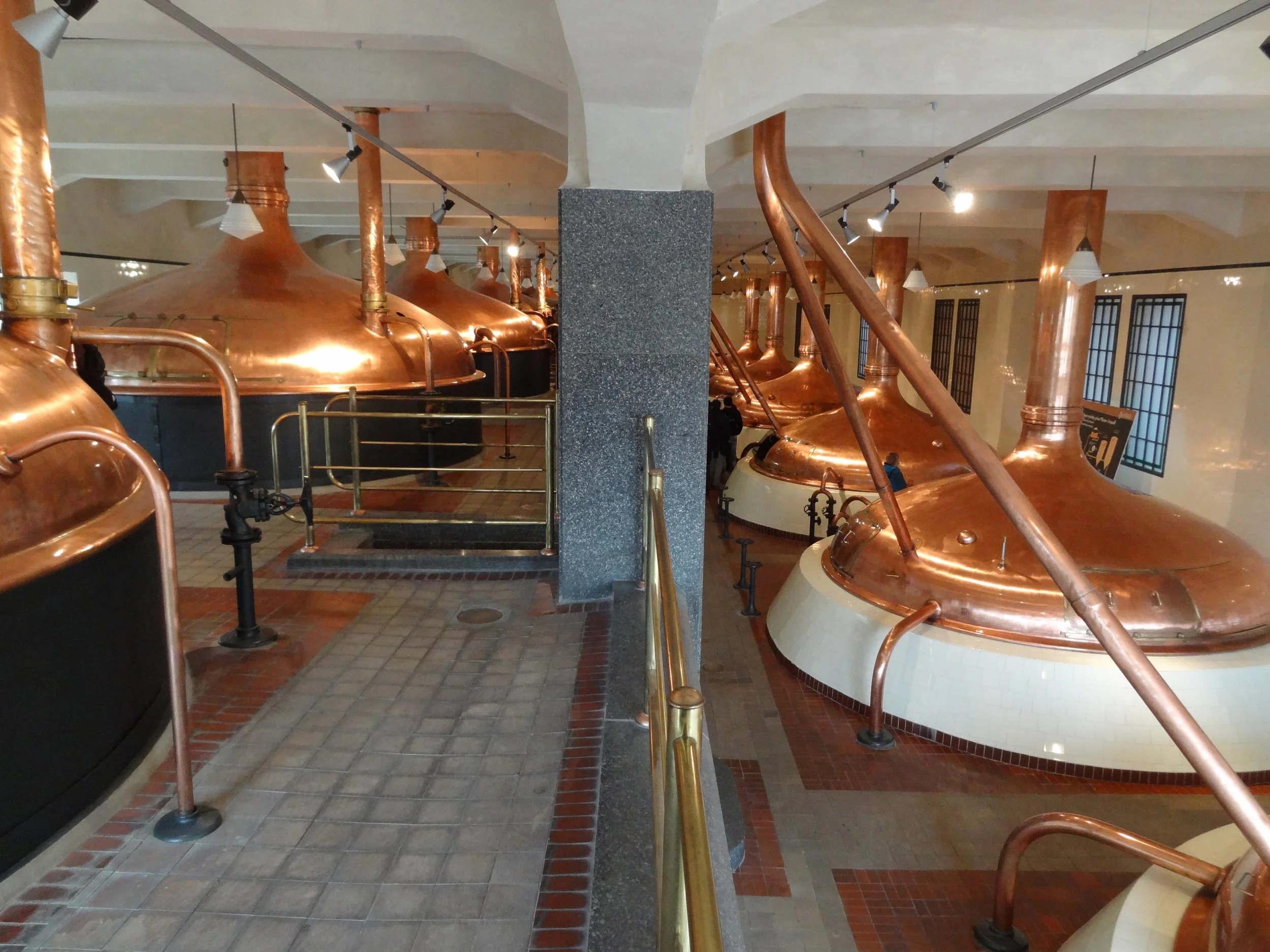
In 1948, after three years of drifting politics, Czechoslovakia adopted a new government following what became known as the Ninth of May Constitution. It was a triumph of this newish experiment of Communism, and one of its signature features was nationalizing all commercial and industrial enterprises.
Read More
Why We Homebrew
The reason homebrewers brew, and the reason non-homebrewers fail to understand why, has nothing to do with the finished product. It has everything to do with the process. We create because we can’t help it.
Read More
Vignette # 17: Rudi Ghequire (Rodenbach)
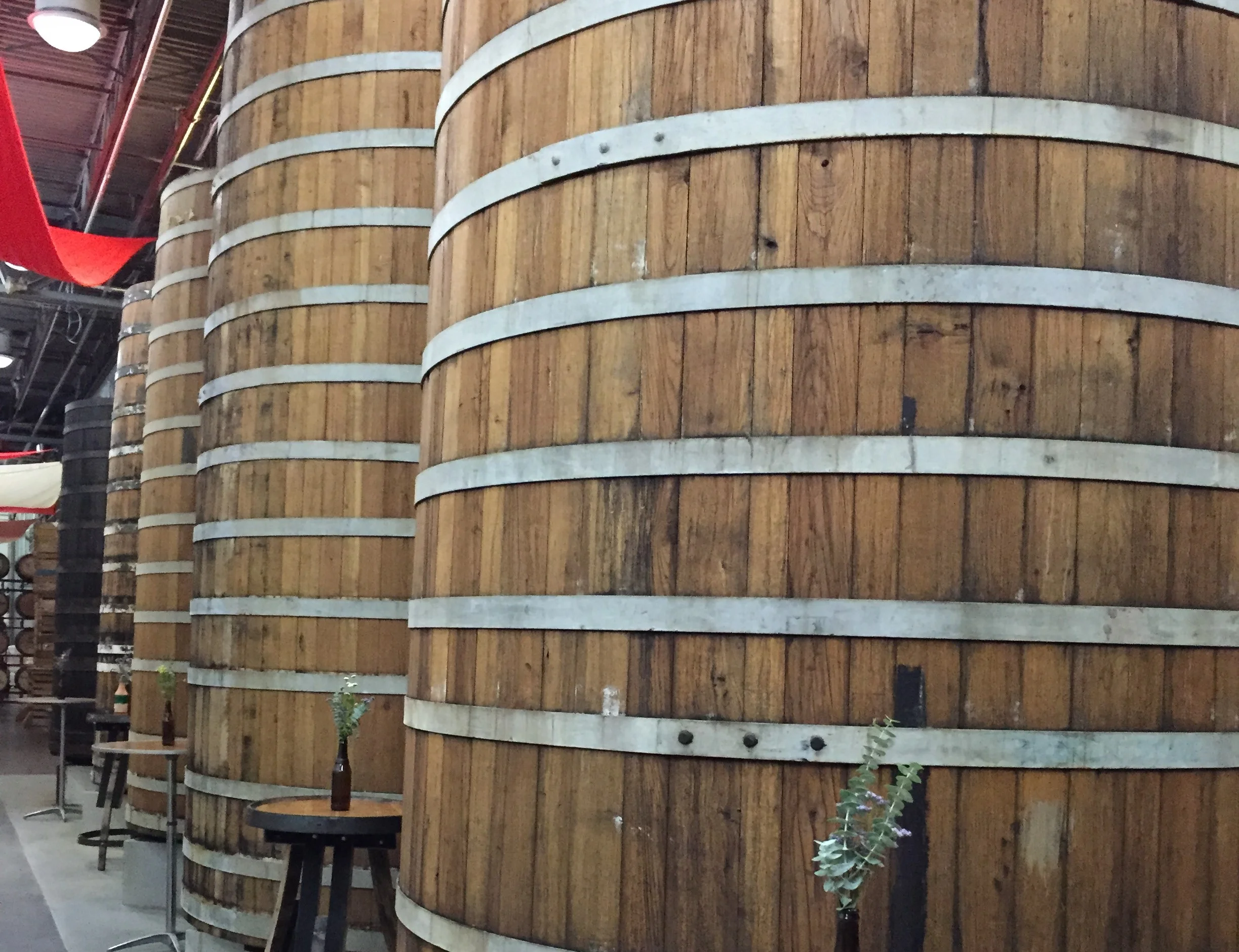
"The big difference between spontaneous fermentation and mixed fermentation is with spontaneous you go with wort on wood and we go with young beer."
Read More
The Wonder of First Contact
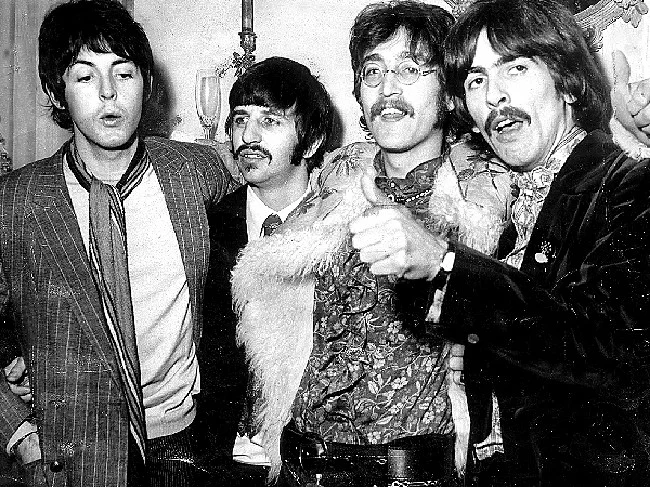
If you've just recently returned from Botswana, there's a small chance you missed the news that Sgt Pepper's Lonely Heart Club Band turned fifty last week. I wouldn't be listening seriously to music until the late 1970s. By that time Sgt Pepper's was an oldie, and all the polyphonics the Beatles deployed were familiar and considered normal.
Read More
The Trouble With Beer Numbers
What do all these details tell us? At the best, they provide accurate information to the small minority of people who know what they mean. At the worst, they provide misinformation. Mostly, though, I think people just tune them out. You really have to know a lot about beer to interpret them and, even then, they are for the most part not that revealing.
Read More
I HAVE A MINOR COMPLAINT: Your Label Fonts Are Too Damn Small
Moby Dick will not fit on that label. Do not send hundreds words of prose to your design guy and tell him to fit it on that piece of real estate, which even on large bottles is the size of a business card.
Read More
Could the US Eventually Hit 50% Craft? (Yes.)
Specialty coffee--the equivalent to craft beer--is now consumed by more than half the drinkers in America daily. Daily! Equally remarkably, this has doubled in seven years. I remember the first Starbucks in Portland--it arrived in about 1987. We'd already had craft beer, but specialty coffee as a national phenomenon actually got an earlier start. Like beer, we imagine the trajectory of adoption was a good deal more quick than it was. I'd have guessed specialty-coffee saturation had already plateaued by the mid-aughts. Instead, what happened was a much slower change followed a sea change. The tipping point happened somewhere in the past decade, after which specialty coffee went from being, well, specialty, to completely bog-standard mundane. Everyone drinks Starbucks now.
Read More
Death of the Neighborhood Tavern
Bars like this have always been vulnerable, and churn is high. They're low-margin businesses that depend on volume sales and low rent. In cities across America, both trends are working against the neighborhood tavern. With more and more places to drink, dive bars don't get the traffic they did twenty years ago. More significantly, as the middle class leaves the suburbs to return to the city, rents are on the rise in the urban core.
Read More
Glorious, Terrible Bar Food
The most vivid of the foodstuffs to which I drunkenly resorted were 'lil smokies, one of those fancy items that the bartender had to microwave before serving. They were maybe two inches long and the girth of an average index finger. They were spiced to cover up what was obviously the hooves and snouts they were made from--and bone bits crunched under tooth as you gobbled. They were also stained a maraschino red, unnatural and unsettling (why would they try to make them look more vividly bloody?).
Read More
Beer Sherpa Recommends: pFriem Cryo Pale Ale
Thiol-heavy dankness dominates the nose. Thiols, recall, are those sulfur compounds in hops responsible for savory aromas and flavors like onion, chive, and cannabis stickiness. If you continue to snuffle the fumes rising from that snowy head, you do find a sweet tangerine note trying speak, but it's subtle. Learning that Mosaic and Citra were the two powdered hops used, I understood from where those thiols came: Mosaic, my old frenemy.
Read More
When Giants Go Small
Last week we learned that Peter Bouckaert was leaving his post as New Belgium brewmaster to start a small, new brewery. This is far from unprecedented. Larry Sidor turned Deschutes into a regional powerhouse; in 2012, he left to start Crux Fermentation Project. More recently, Stone's Mitch Steele left to start New Realm in Atlanta.
Read More
Lonely Planet's Global Beer Tour: A Missed Opportunity
The Lonely Planet has a new guidebook for those wishing to make a pilgrimage of the world's great breweries. Or anyway, that's what the cover says. Inside is a different matter.
Read More
Remember When Stone Was Cool?
In the mid-1990s a new generation of brewers introduced a kind of verve and edginess to beer. This new generation were also tiny, but they were brash and had big ambitions. Some, like Dogfish Head, aspired to transform beer. Sam Calagione was miles ahead of his contemporaries in anticipating that experimentation would one day drive sales. Some, like Stone's Greg Koch, promised to crush big beer. Even when Stone was tiny, he brought the attitude: "you're not worthy," he told drinkers of that old, fizzy yellow lager.
Read More
Vignette 16: Karl Ockert (BridgePort, Deschutes)
BridgePort came out with IPA in ’96 and people looked at that and basically said, ‘Hmm, nice, niche beer. But hop-led beers will never become dominant because who’s going to drink anything that hop-loaded, you know?’ Fifty BUs? My god, you have to practically choke that down. And now look at it.
Read More
Can AB InBev Restrict the Flow of Hops?
Last week, AB InBev (ABI) made news (and sparked anxiety) by buying Asheville's Wicked Weed brewery. This week they've caused even more anxiety when news broke that they had seized the entire crop of South African hops. Dozens of stories have been written about it, and breweries have been shooting off angry emails all week.
Read More
Revisiting "Summer IPAs"
I recall the moment when Vaporizer and Maiden the Shade came out. They were a welcome development. The notion of an IPA brewed to be consumed in the hot months seemed like an excellent one. Heat does something to the body that changes the way it receives viscosity. Heavy beers just don't do the trick.
Read More
How Beer Became a Moral Issue
The age of consolidation has surfaced one of the more unusual quirks of the American craft beer segment: the strange morality that has come to pervade it. There's really no other word, either. Morality is that agreement among groups about what is acceptable. It is a self-protective urge, a code to minimize harm either through social norms or ones of purity. It enforces loyalty, which further strengthens the group. Although our friends the 18th-century philosophers tried to argue for a natural or universal morality, it's clear that morality is a purely a social construct that varies place to place. And there is a moral code both craft breweries and craft beer drinkers recognize, as this latest blowback demonstrates.
Read More
Changes Afoot in the Hop Fields
Last week, the Hop Growers of America released their annual crop report, and it was full of interesting details. Agricultural reports may not seem like the most interesting subject matter, but given how much our little green friends dominate our favorite beers, there's a lot here to ponder.
Read More
A History of American IPAs
American IPAs have to date passed through three discrete eras. The first, which constitutes examples generally made before the new millennium (with a few exceptions), existed mainly after the mid-1990s. From the late 70s until then, there really weren't many examples to speak of. This seems impossible given their ubiquity now, and a few years ago I had to do a bit of research to confirm that it was true. I consulted a couple books I had that rounded up all the available beers at the time they were written.
Read More