What Pubs Represent
Mark Woolf/Unsplash
“It’s a given, isn’t it, that pubs are a good thing and deserve protection? Well, it turns out that many people disagree…. Everything Labour does is currently seen through the lens of its regretful pandering to Reform voters. And pubs, like it or not, have an uneasy place in the so-called culture wars.””
That comes from Boak and Bailey on the meaning of pubs, which have just received additional protections by the UK government. B&B were reflecting on the way people thought about pubs “outside the bubble” of the beer world, where we take it as gospel that they are great for society. They remind us that our view, whatever its merits, is not universally embraced.
Their thoughts and the comments that follow are interesting in part because they are so British. I imagine the U.S. government considering a law to protect old pubs and actually snort in pleasure at the idea. Good luck with that!
Which is not to say drinking holes are not a potent topic here. They are, but it’s quite a different conversation. And, as I thought about their meaning, I realized that even in the span of my own drinking life, the meaning has changed. Although I’m still sort of on vacation, I thought it was worth saying a few words on the matter.


When I was beginning my drinking journey in Oregon in the 1980s, prior to the mass acceptance of craft beer, American bars were largely scuzzy, disreputable places. This reputation was a remnant of the lingering effects of Prohibition and the Puritan strain that runs through American culture. And in Oregon, that disreputability was reinforced by law. At the time, bars couldn’t have windows like regular buildings. Or, if they did, the apertures had to be above eye level, so passers-by wouldn’t be scandalized by the sight of rakish men and loose women drinking alcohol. The posher members of polite society didn’t believe bars should be accepted into their company, and this law made it impossible for them to even try.
Of course, Oregonians still drank. A lot of them. So they had to figure out ways to negotiate the gap between the drinking reality and that little fiction created by downtown landscapes where it was hidden. Language hints at how they handled it.
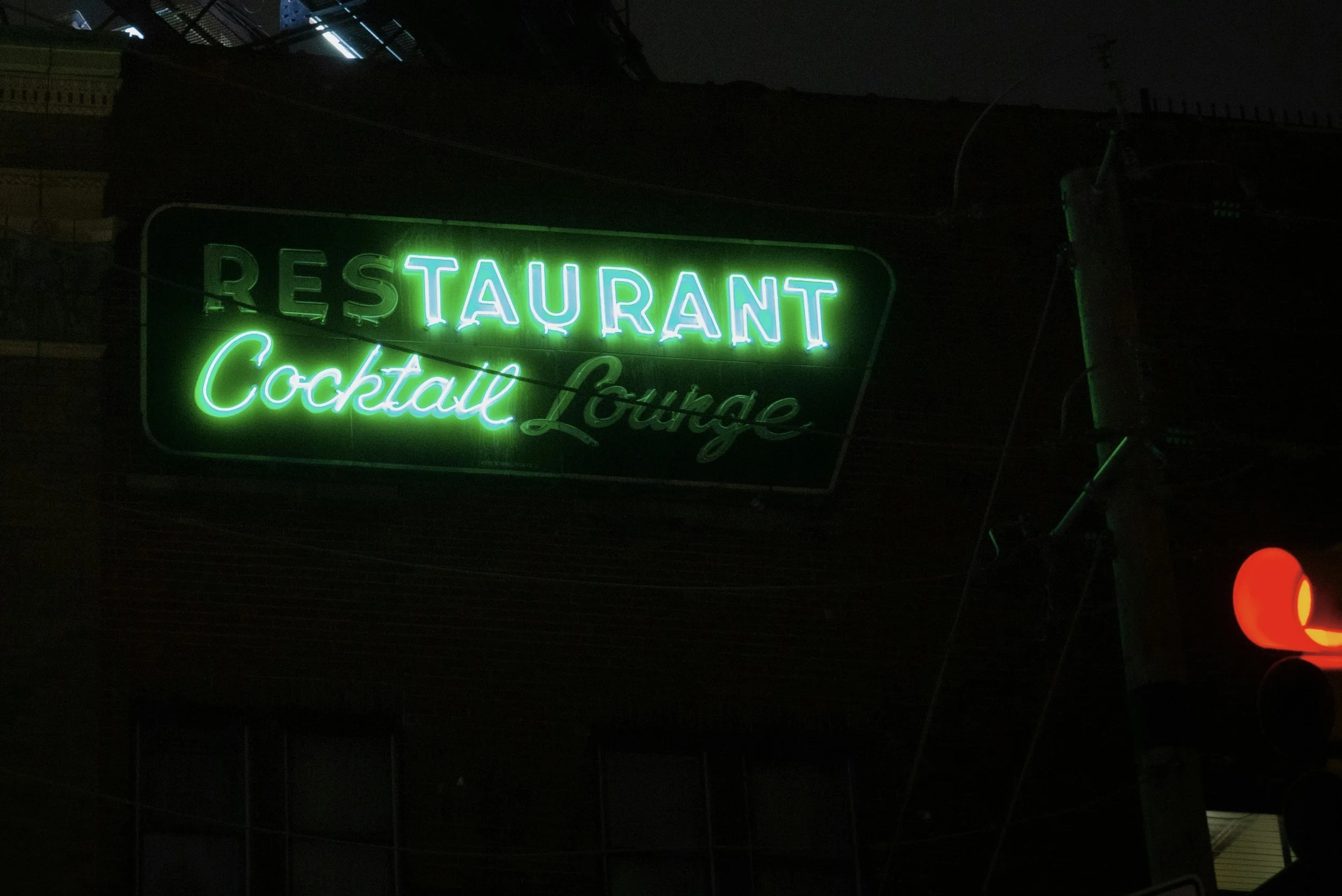
American drinking establishments have had many different names over the years, and they all have a slightly different meaning. During the second half of the past century, “lounges” were the most upscale. They borrowed the respectability of attached restaurants—the “So and So Restaurant and Lounge.” Note how “cocktail” adds even more respectability to the word lounge in the picture at the top of the post. You can almost see the rat pack, cigarettes dangling insouciantly from grinning lips, blinged-up hands encircling martinis beading in the blue air.
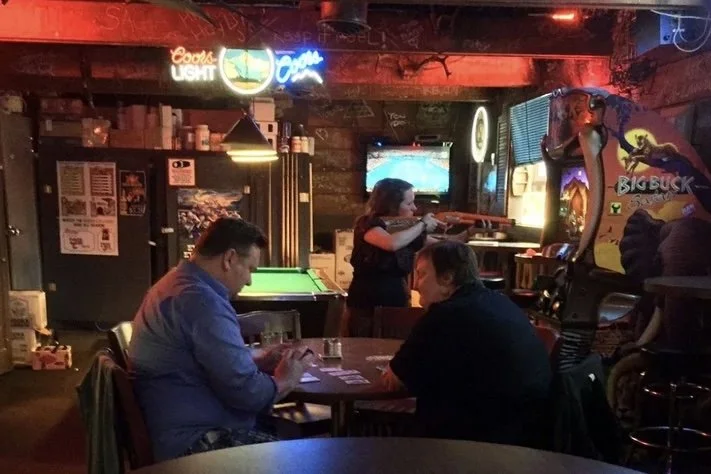
Bars, meanwhile, have always been low and common. They would once have been expected to contain pool and shuffleboard tables, the stink of smoke and spilled beer, and lots of flannel. Prior to craft beer, those regular neighborhood joints were just bars. Now the exact same places are “dive bars.” In the 21st century we also have “wine bars.” See how a modifier changes everything?
Pubs were quite uncommon and European—English or Irish pubs, gussied up to evoke foreign lands. “Saloons” were obsolete relics of the frontier, except for rare cases where obsolescence was part of the draw. Now we have “taproom,” which is reserved for places focused on craft beer, and brewpub. Once, the distinction indicated whether a brewery lived in the same building as the drinking area; today it refers to the presence or absence of a restaurant.
I was surprised to learn a few years ago that cask ale and the classic old pubs that serve it have a decidedly conservative cast in the UK; that’s what Boak and Bailey reference above. I think of pubs as ordinary and universal, a place to serve the common drinker. Surely it would signal the Labour Party. But in today’s world, we think less of class than race, and pubs are icons of king and country—places where you find English or British people, if you know what I mean. Despite that, drinkers still expect cask ale to be cheaper than kegged lager, a remnant of Britain’s own working-class expectations.
By contrast, craft beer now tracks left, which is why breweries have lately gotten in trouble for hosting Republican events. I have found craft beer’s leftward tilt unusual. Small businesses are usually owned by center-right entrepreneurs who want low taxes and lots of customers, so they lean conservative financially and socially ecumenical.
But this is far from fixed. I don’t know what accounts for the current orientation of craft beer, but give it two or five generations and I bet we’ll find more typical politics from the owners. A decade ago, taprooms were the cool place to go. They seemed fresh and new, and young people went there. Now taprooms are emblems of a certain aging, middle-class White demographic, which is to say definitely not cool. (Dive bars are the beneficiaries of this shift, and are now far more popular among the young.)
Alcohol is a drug. Under its application, people’s voices rise. Add loud or live music, and they rise even more. According to the dichotomy identified by Boak and Bailey, I’m on team pub (/bar/lounge/taproom). I believe they are a net positive for society. But they’re always going to be loud places with noisy people, where engines are gunned late at night, where dog-walkers find piles of sodden cigarette butts and vomit in the morning. For this reason, they will always have high social salience. A salience that will shift and mutate over the decades, provoking new arguments for and against. I hope to be around to join in.