How Breakside Built America's Most-Awarded IPA
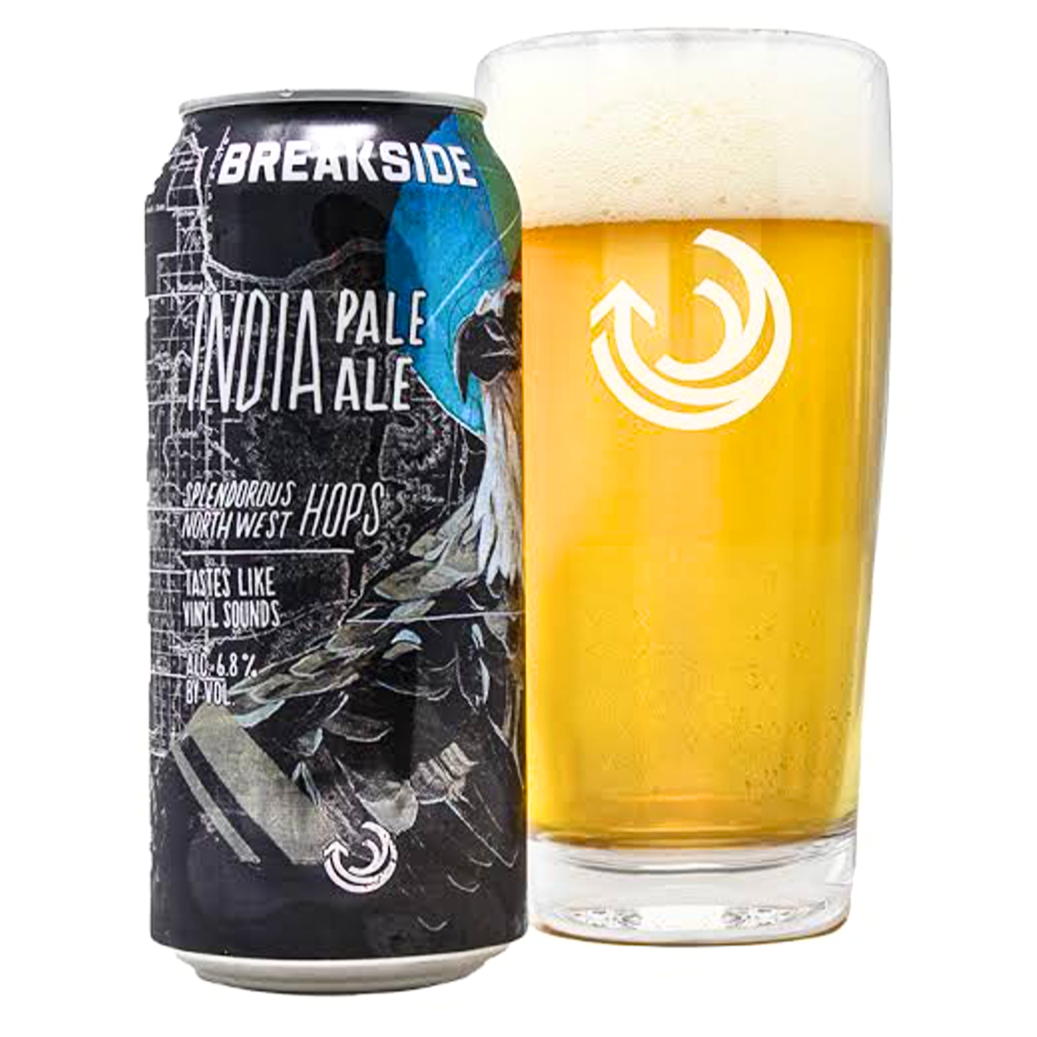
Last month, Breakside IPA won a gold medal at the Great American Beer Festival in the American IPA category—more than a decade after its first win, also a gold, in 2014. In that span, it has collected five medals at the GABF, and three in the past four years. No other American IPA has earned more than three medals at the competition.
That is a remarkable run of success for any beer, but especially for an IPA, a style that has been under constant evolution for decades. Although it won gold for the first time twelve years ago, Breakside brewed its eponymous IPA in 2010, which was a totally different epoch in American brewing. It would be another year, for example, before IPAs would finally supplant pale ales as the most popular craft style.
Breakside itself has gone through major transitions since 2010. At the time, it was a brewpub in an outer Portland neighborhood with a 3-barrel brewery tucked into a tight basement. Ben Edmunds was not a Russell Schehrer award-winning brewmaster. He was a young brewer experimenting with oddball ingredients and exotic beer styles. By 2014, Breakside was evolving into a more conventional brewery focused on hops, but winning the gold medal at GABF (when there were only three IPA categories—American, English, and double) sent them into high orbit.
I recently sat down with Ben to discuss how he has managed to keep Breakside IPA squarely in the center of current trends—and indeed, making it an exemplar for the style. It’s a fun and hopeful story in bleak times, and Ben surprised me with a few facts along the way. And, as I would realize during our conversation, the development and evolution of Breakside IPA tracks very closely with the style’s American trajectory—and craft beer’s.

“Forced” to Use Citra
Ben Edmunds brewed Breakside IPA for the first time in 2010 when, he says, “Oregon IPA was pretty muddled and pretty like English-y.” (I encourage you to take that bold claim up in comments.) As he was creating his version, Ben looked to the California IPAs that were inspiring him, like those from Russian River, Pizza Port, and Bear Republic.
“I wanted to make a Simcoe/Chinook IPA That was the original conceit,” he began. “But this is during that post-hop shortage of 2008, and I couldn’t get Simcoe. Well, so guess what I could get instead of Simcoe? A new hop called Citra. It was easy to get. No one was using it! And that is how Breakside IPA started as a Citra-Chinook IPA.”
In one version of the IPA story, the introduction of Citra and its modern IPA-hop successors created a revolution in technique and beer styles. A more granular version of the story includes changes that were happening regionally.
“But, you know, [Boneyard] RPM, Breakside IPA, Georgetown Bodhizafa all come out right at the same time. Like, something’s in the water. They have higher aroma, but bitterness is still very high; there's still a lot of maltiness in these beers. But the dry hop was the thing.”
Hazy IPAs would gain recognition as the avatars of the flavor and aroma revolution of the mid aughts, but it was happening everywhere—and it happened earliest in the West Coast. It was a period marked by incredibly fast evolution, and that’s why, when Breakside decided to create a second IPA a few years later, they were already thinking of it as the “modern” one. Perhaps because it was designed as their “Washington IPA,” developed for a journey up I-5, they called it Wanderlust. These two beers, born just three years apart, become part of a single story.
Mosaic and Wanderlust
By 2013, Breakside was growing fast enough that they could make the move into Washington and begin plans on a larger production brewery in the southern Portland suburb of Milwaukie. But now Citra was no longer so easy to get.
“Anyway, you know, there's about a year then, like around 2012, that we can't get Citra anymore. And I'm learning about hop contracts for the first time, and again, we're making 500, 600 barrels a year a year, right? We're tiny, we're a 3-barrel brewery. We're planning Milwaukie, but we’re literally running out of IPA, because that's the one beer that's selling best.”
That year, 2012, was Mosaic’s debut, and had Ben tasted an Odell beer at the Craft Brewers Conference made with the brand-new hop. He was blown away by it. “I immediately tracked down my contact from County Malt Group and ordered 800 pounds of Mosaic. No selection, of course, just these boxes that start showing up at the brewery.”
Wanderlust became Breakside’s “modern” IPA, the one where Ben could experiment with not just the hottest new hop, but emerging techniques. “If you look the malt bill between those two beers, one is clearly looking backward and the other is clearly looking forward. And it's like if there's book ended chapters, one beer is closing the chapter on this era of IPA and the other is opening the next. Because breakside IPA risked becoming a dinosaur, we had to modernize it. ”
It’s hard to accept that a three-year-old beer could be “looking backward,” but such was that era of amazing growth. I remember the change distinctly, because I finished the manuscript for The Beer Bible in May of 2013—about the time Breakside would be thinking about their new IPA—but due to various unforeseeable difficulties, it took the publisher more than two years to hit the shelves. By August 2015, the chapters on hoppy ales were already seriously out of date.
Breakside had a decision to make after Wanderlust came out. Should they leave the old dinosaur as it was, or tune it up using the new techniques they had learned? “Remember, there was limited literature out there on utilization during whirlpools; it was basically non-existent,” Ben said, recalling one of the big issues with Breakside IPA. “We realized we were actually getting a huge amount of bitterness from those charges. So when we figured that out, that was a big step forward.” They chose to revamp the beer, starting a continual process of evolution. That was 2014, the year they sent the revamped IPA to the GABF to win its first gold medal.
Still Iterating
When I sit down to talk with Ben, our conversations follow a predictable arc: Ben immediately reports the latest discoveries he and his team have made. I have never met a brewer who thinks more about what lies around the next corner than Ben. Their current investigations concern using different techniques—contact time, temperature, and pressure—to figure out how to maximize the positive qualities of dry hops while minimizing the negative ones. It was, as always, highly educational. Yet by the time we got to the story of Breakside IPA, he was slightly more reserved. Looking back isn’t his jam.I found myself coaxing him to brag about his most-awarded beer.
This was about as close as he got. “I think performs well in American IPA as a competition beer because it's basically a [modern] West Coast IPA with Chinook. And that just that anchors it. Anchors it in this older set of flavors. And that's, you know, I and I love that and I honor that. I love Chinook. We’re probably one of the biggest customers, of Chinook on the west coast, right?”
Perhaps that is narrowly correct. In the aftermath of the haze age, IPAs all evolved. Non-hazy styles all became drier and crisper, including American IPAs. You could also say that in the past dozen years, Breakside has continually updated Breakside IPA so that it remains an exemplar of the American IPA style at any given time. Ben was part of a generation of brewers who saw evolution as a normal process, and that decision has had a huge impact on Breakside IPA’s durability. And here Ben did connect those future-looking experiments with his 16-year-old flagship.
“There's no brand we've created in the last 10 years that has outpaced Breakside IPA or Wanderlust. That's because every lesson that we take from all the new products, all the new varietals, all the new techniques that our friends are using, we apply them into these brands, our original brands. But we also modernize them too, and don’t allow them to ossify or fossilize—that’s the key, right?”
It is not in every brewery’s nature to look around the next corner. Some of the world’s best breweries exist because of their fierce devotion to continuity. No one is going to argue that Sierra Nevada should have been changing its Pale Ale over the past 46 years. These approaches, innovation and preservation, always exist in tension. The lesson I take from Breakside is not that evolution is the best approach. Rather, it’s that having taken the evolution pathway, they have committed to it perhaps more effectively than any brewery in America. Even if Breakside IPA never wins another award, it has demonstrated how to evolve gracefully. Then again, I wouldn’t bet against it.