Despite Reports, Oregon Hops Are Doing Fine
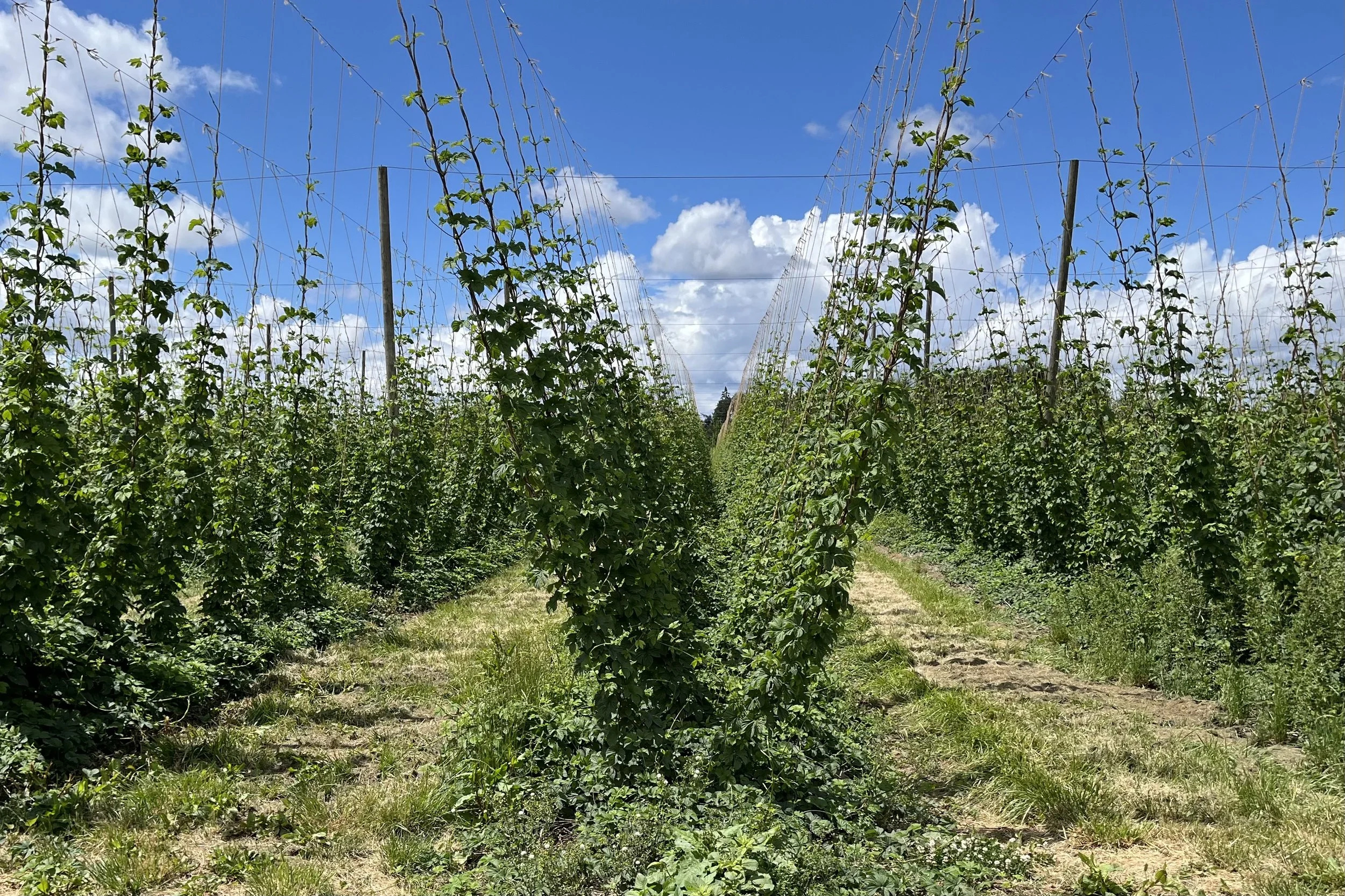
A Crosby hops hop field near Woodburn, OR on June 6, 2026
A week ago, local Portland TV station KGW published a worrying story:
“Oregon hop growers are adjusting to an accelerated growing season after an unusually warm start to the year, raising concerns about how summer weather could affect one of the Pacific Northwest's most important agricultural crops. Some growers report that warmer temperatures in May pushed hop plants into a faster growth cycle, compressing the amount of time available to complete essential fieldwork.”
I don’t know anything about a hop’s growing cycle, but this certainly jibes with my experience of May, which was hot. The skies over western Oregon don’t clear until July, historically, anyway, but May was sunny and historically warm (7th all time, per the KGW piece). I reached out to a number of local growers to find out how dire things were, and the happy news is that, yes, it was hot—but that won’t necessarily doom the crop.


The growers agreed it was warm, but not exceptionally so. “I can’t speak to the news clip, but so far from our perspective we’ve had a good Spring growing season,” wrote Blake Crosby of Crosby Hops in an email. “May was a bit warmer than last year but not as warm as May 2023 which did create some early bloom issues in certain varieties.”
At Westwood Farms, Senior Farm Manager Andy Livesay sounded a similar note: “Hop growth was slightly ahead of schedule early season on our farm, but seems to be evening out as we are getting some more normal Oregon spring weather.”
As usual, Max Coleman of Coleman Agriculture gave the most detailed, data-driven answer. (Max loves data!) He started by basically agreeing with the group’s sentiment, but then provided a ton of granular detail.
“After the hops come out of the ground, the farmer gets more chances to make decisions influencing their timing. For example, do you burn back the initial shoots early or late? Then that, plus the weather, will determine when they are ready to train on the string. You can also vary your fertilizer to try different approaches… So the answer is: mostly, it depends.
“Early warm spring = hops getting up the string a bit quicker, with less wiggle room on training as more varieties are in the right growth stage at the same time.
“If the rest of the summer is normal (mostly 80s, not too hot, maybe a couple more showers in June) = average crop + 3% in the most varieties
“If the rest of the summer is hot (90s-100s) and dry= more heat sensitive varieties will see a yield decrease (5-10%) and more heat-tolerant/later-maturing varieties seeing slightly better yields (5%)
“Generally, the rule of thumb is you want your hops to hit the top wire by the 4th of July, and be arming out (growing lateral arms that grow cones), and flowering mid-late July.
“I think some growers are nervous because some are hitting the [top of the trellis] early. I've seen Citra, Simcoe, and Strata across a couple of growers/our farms already, though usually it is less than 30% at the [top].
“Sometimes, this can mean the plant will try to flower before it has fully developed lateral arms, resulting in lower yields and/or split blooms, where some bloom early and others bloom late, leading to poor quality from a mix of ripeness levels. I'm always surprised by how much everything evens out from early spring to the 4th of July, barring disease/pest issues, so I'm not trying to worry about things until it is warranted.”
Max also provided a technical note about “growing degree days,” which is a mite too technical for our purposes, but if you want to go deep, start here.
I’ll give Andy Livesay the last word, which provides the collective upshot: “I certainly don't have any major concerns with the quality of the hop crop here in Oregon. Hops are looking solid and we should be set for a successful harvest here in the Willamette Valley.”