Alan Sprints, 1959-2026
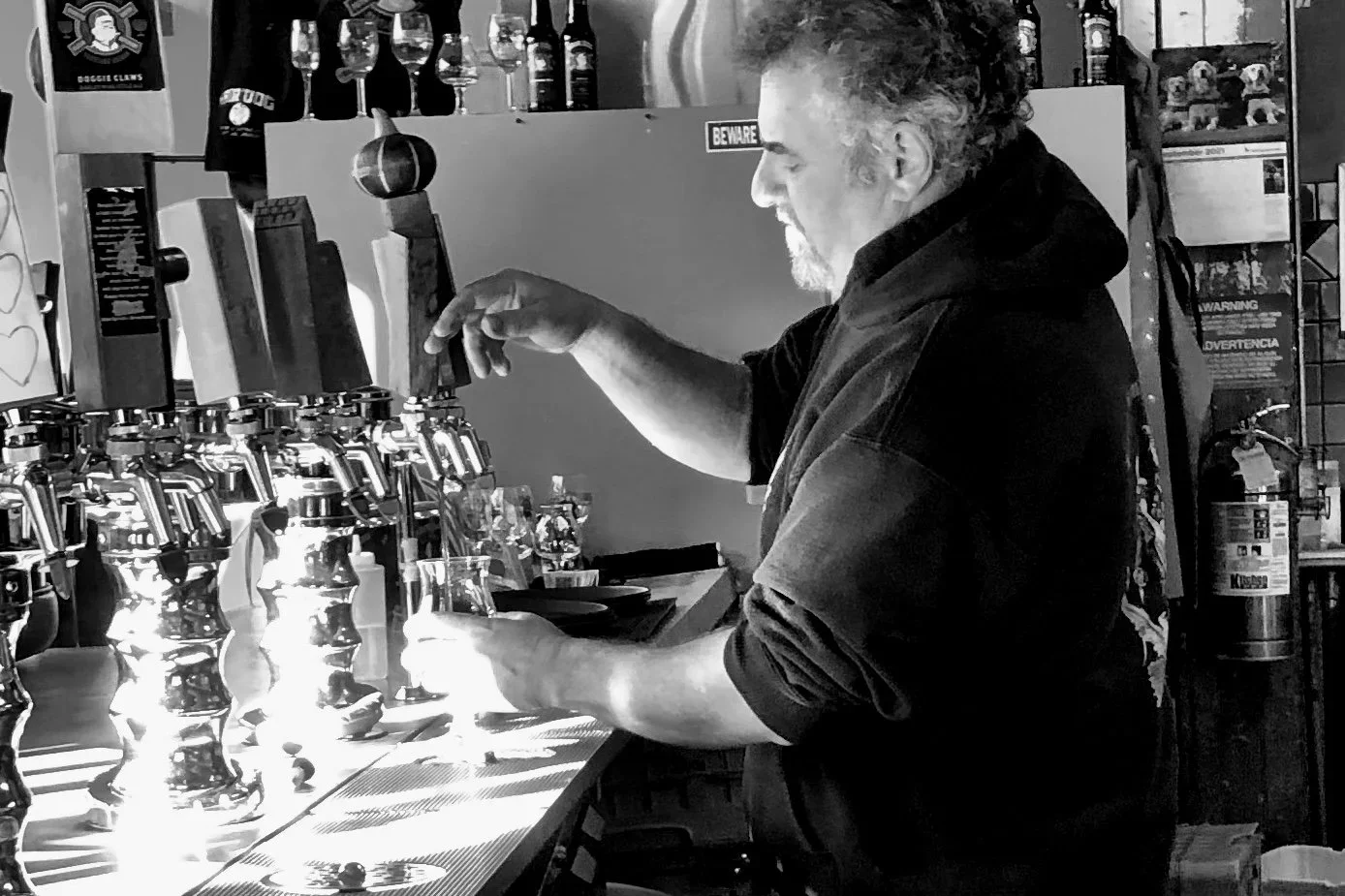
Alan Sprints, the iconoclastic brewer behind Hair of the Dog, died yesterday at 66. His death was not a surprise; in April he announced his fight with cancer on Facebook and didn’t soft-pedal his diagnosis. That was typical of Alan. He was always forthright, and in this brave act was a kindness that marked his life; with the public announcement he let us know what was going on so we could connect and prepare.
He had already retired from brewing and closed Hair of the Dog, so his passing is a more personal loss. His family posted an obituary to Facebook, and the tributes are pouring in. Hair of the Dog helped change the trajectory of brewing; the man behind the brewery touched many lives.


If you’re not familiar with Alan’s life, this paragraph from the obit touches on the main currents of his life:
“Alan was born on September 7, 1959, in Culver City, California, to the late Lila Entis and Martin Sprints. In 1988, following his passion for the culinary arts, Alan relocated to Portland, Oregon, to attend the Western Culinary Institute. After honing his craft for several years in the food and beverage industry, Alan took a bold leap in 1993 by founding the Hair of the Dog Brewing Company. Over the next three decades, he built a legendary business celebrated by beer enthusiasts worldwide. Alan was a true pioneer in the American craft brewing movement, introducing an old-world approach to beer making and creating uniquely complex, barrel-aged, and high-gravity beers that challenged and redefined the industry.”
I discussed Alan’s life when he closed the brewery four years ago, highlighting how he chose the difficult path, which I think really captures why he was such an important figure. He made weird beer with a small audience, and one that never really grew. He was much celebrated among those who liked his beer, but his vision wasn’t a mainstream one. Alan was the kind of brewer who was never going to make a seltzer or a milkshake IPA. Nevertheless, he refused to alter course. The comment I hear from brewers more than any other is, “I brew the beer I want to drink,” but in few cases was it actually true in the way Alan applied it. When it came to making money or making the beers he wanted, he let the money go.
“I’ve always been a bit of a contrarian, so I like to go my own way. There were people like me who wanted [the kind of beer I make] year-round. Unfortunately not that many people. It didn’t take me many years to realize that people aren’t really interested in unusual—I mean there are—but most people are interested in popular. So if you make whatever’s most popular, you probably have an easier time selling it.
“I tell people to be true to themselves with recipe formulation, not to follow trends, but to lead the way. It’s a difficult path, and it’s not for everybody.”
That long post captures who Alan was and why he was important. Go read it if you’d like to know more about Alan’s life. But since this is a moment to celebrate Alan, I’ll share the effects he had on my life, which were significant.
I became aware of Alan before or as he opened Hair of the Dog, because in doing so he violated a non-compete contract he’d had with the brewery he worked for at the time, Widmer Brothers. He started at Widmer in 1991 washing kegs, and he opened Hair of the Dog in 1993. When he opened, news stories started appearing about big, bad old Widmer suing a little guy. I interviewed Alan for The Widmer Way, and he described it this way: “In my mind they were a draft-only brewery that made only wheat beer and I was a bottle-only brewery that made mostly strong beer… In the end we settled and I agreed not to make Hefeweizen.”
This incident has mostly been lost to memory, but it was a huge deal at the time. The narrative of the little guy fighting the big, corporate behemoth was developing at this point, and this incident became a cause célèbres for craft breweries (of course, Widmer was also a craft brewer, and by modern standards not a very big one, but never mind). The incident was important legally—the legal finding ended the practice of non-competes in brewing as unenforceable—but it engaged my own contrarian spirit and probably did more than anything to turn me into a beer fan. When Alan released his second major beer, Fred, I stood in line to buy a case of it at the brewery. I was a fan boy from the start.
I was living in Wisconsin when Alan started Hair of the Dog, and to feed my itch for hoppy NW beers I started homebrewing. I was an extract brewer, as most people are when they start, but I wanted to understand “real” brewing. When I returned to Oregon, I took an all-grain class at FH Steinbart’s (RIP). The instructor? Alan Sprints.
He was a natural teacher, demystifying the brewing process so that it was approachable for newbies. I remember to this day his instruction to pour 170-degree water on the grain bed, and that was basically it in a nutshell. It wasn’t, of course—there are so many variables. But he knew that anyone who wanted to improve would pick up a book and learn the rest. To have a brewer of Alan’s stature teach that class and make it seem so easy—it was enormously empowering. I could imagine a different teacher flooding us with a bunch of information about mill settings, grain-to-water ratios, and pH, and I would have given up on the spot. Instead, Alan made me a lifelong brewer.
The brewery eventually shifted locations from its almost laughably industrial beginnings, but aside from that, it didn’t really change. Alan anticipated many of the innovations that would mark American craft brewing, from big, brassy beers to the emphasis on hops. His own vision for the brewery was remarkably consistent throughout the next three decades. Alan and Hair of the Dog became touchstones in my own beer life and his beer was a constant in a world of change. One of my favorite beers in the world was Adam, and I would return to it over those decades when I needed something comforting—and something to blow my socks off. I interviewed him many times, made regular visits to the brewery, went to Fred Fest. From the ‘90s until the brewery closed, Alan was the coolest host at the coolest hang-out in Portland. It was one of my happy places. In making the pub so welcoming and sticking to his vision, Alan built a classic Portland institution. What a gift.
He was a citizen brewer, always present at the brewery, always willing to engage with anyone—from Southeast Portland or Scandinavia. I didn’t know Alan that well, but I will miss him greatly. I know many people are feeling that way today—thousands, I expect. If you wanted a measure of a life, that’s a pretty good one. Alan was one of the best, and I salute him
RIP