Brewers Association Tells Breweries to Stop Making Beer
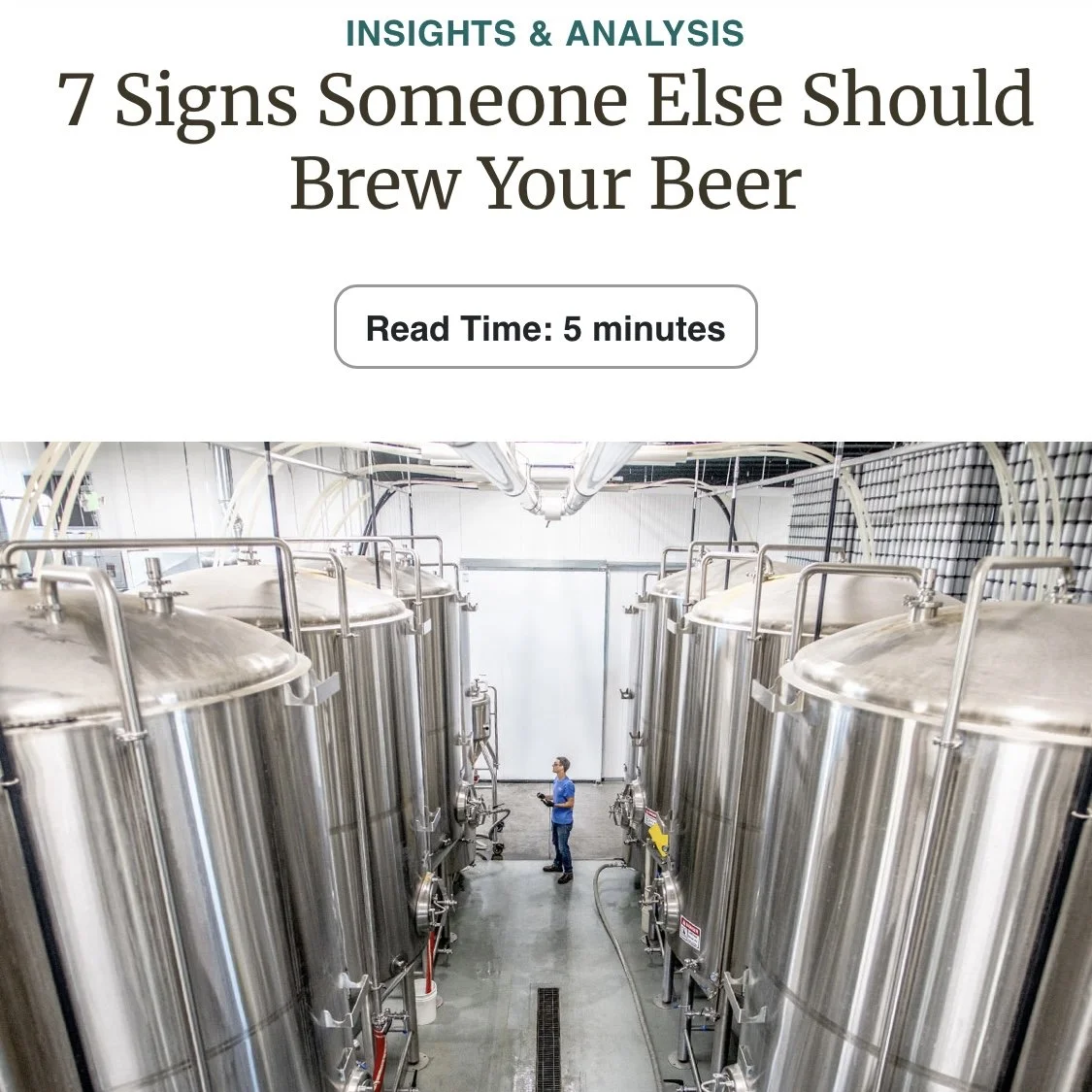
Yesterday, the Brewers Association’s Matt Gacioch posted some advice for breweries: consider getting out of the brewing business.
“Think about what your customers most connect with at your business. Your brewery’s competitive edge may reside in its brands, hospitality model, or product, rather than in its production assets. If the thing customers value most isn’t your production facility, the cost of owning and operating that brewhouse may not be central to meeting their needs.”
The thing is, he’s totally correct—it’s just a little surreal to hear the small brewers’ trade association saying so.

Matt is speaking to brewery owners, and he walks through seven reasons it may make sense to get out of the brewing business and have another brewery make your beer. For the non-owner, they read a little like insider baseball, and what Matt doesn’t mention are two facts with which breweries are already painfully intimate.
First, at the height of growth a decade ago, a lot of breweries expanded their brewhouses to meet rising demand that never materialized. This is a brewery’s “capacity,” or the total amount of beer it could make. In the mid-teens, breweries collectively had around 35-40% of excess capacity—space to grow—and the market was growing from 5-10% a year. Today, the industry has reached 55% excess capacity and it’s shrinking at 5% a year. So a bunch of equipment is just sitting in breweries empty and idle.
Second, breweries are expensive. The equipment costs run well into six figures or more, just as an initial ante. Then there are the labor costs to operate the brewery, energy costs to run the brewery, and rent to pay for the facility. It costs more per barrel to have your beer made off-site, but that is offset by savings on the cost of the brewery. Because there is so much excess capacity, other breweries are happy to contract brew beer.
And most importantly, nobody cares whether there’s a brewhouse on the other side of the taproom wall. Once that was a huge issue in the industry, and brewery-less beer companies carried the scent of scandal. Today, the average drinker has no idea where the beer is made, nor do they care. Matt emphasizes this point:
“If the thing customers value most isn’t your production facility, the cost of owning and operating that brewhouse may not be central to meeting their needs. There are signs that customers have become more accustomed to drinking beer somewhere other than where it’s produced. Just look to all of the satellite taprooms that have popped up separate from production facilities.“
It is worth noting that the Brewers Association and its precursor organization were never against contract brewing. One of the major players in these orgs was Jim Koch, who built Boston Beer on contract brewing. But today, the stigma is gone. The Brewers Association is there to support members, and this is obviously correct advice in a shrinking industry. I am shocked that anyone starts a brewery today. Brewhouse equipment is cheap, but the commitment to brew remains a big expense. You could easily put that $100k into a kickass pub and give people what they’re still paying for—a good experience.
Still, one can’t help but notice the ironies.