The Canned Belgian Ales
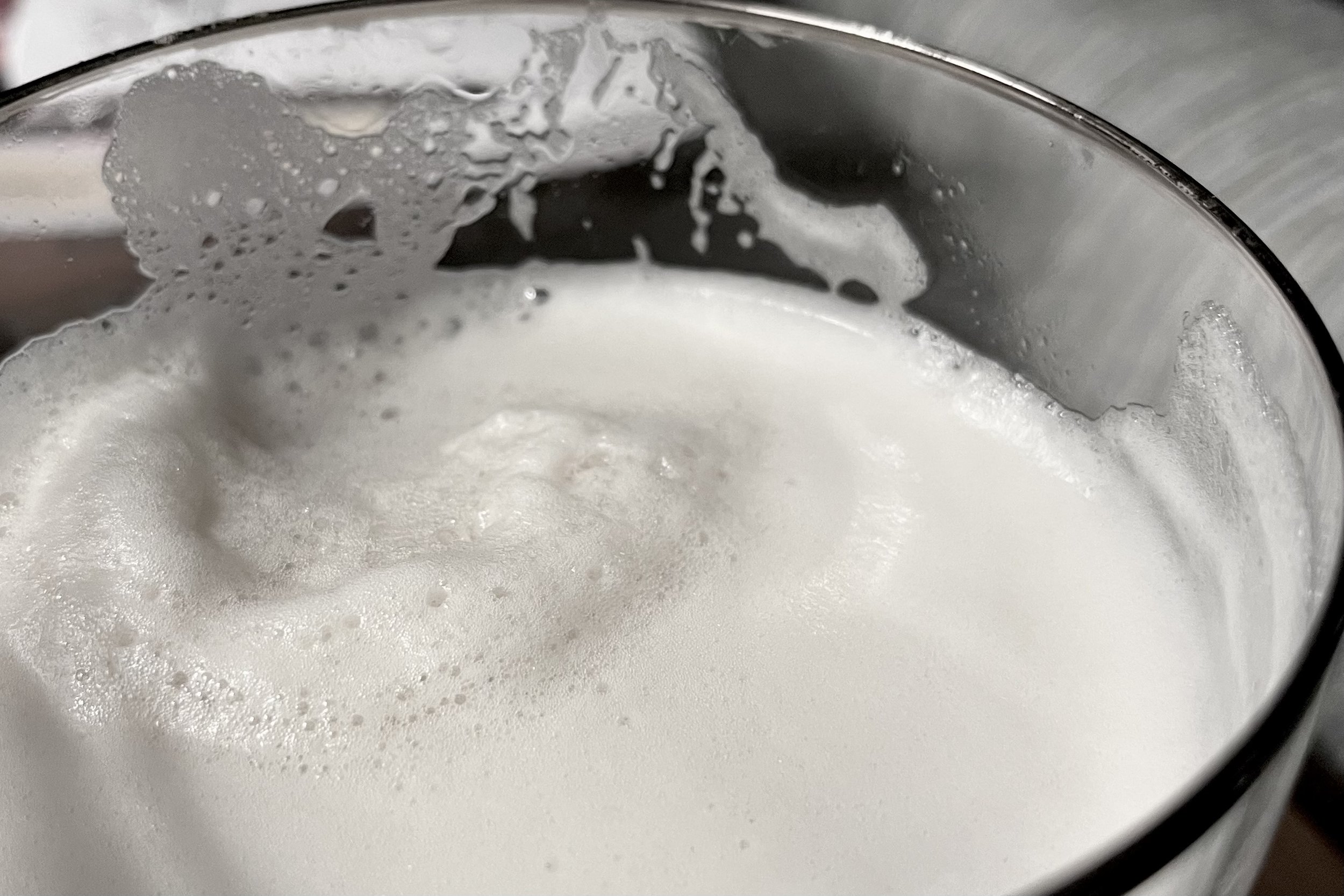
Bottled Orval’s mousse-like head.
One of the small holiday traditions my wife observes is adding a bottle of Orval to my Christmas stocking. I drank 2025’s gift last night and was struck by the carbonation level and subsequent dense foam it formed. This isn’t new, of course: Orval has been using its heavy, skittle-shaped bottle to contain an explosive charge of CO2 for decades. Belgian beers, and especially abbey ales, are famous for their carbonation. The Trappist breweries use a goblet to emphasize their ecclesiastical origins, but its wide shape serves the secondary purpose of allowing the gas to escape and the head to settle.
And what a head! I built up a mountain of medium-sized bubbles, needing to pause halfway through pouring for them to recede slightly. Fed by a mighty bead, the head’s bubbles shrank until they became of blanket of mousse, much resembling a nitro head. (My photo at the top isn’t a great effort at capturing this, but I tried.)
Anyway, all of this interested me, because over the holidays I drank through a four-pack of St. Bernardus Christmas ale in cans. The experience was quite different.


The St. Bernardus was under-carbonated for an abbey ale. It was still lovely, and it scratched my seasonal itch. But the spices were more cloying, the malt heavier and sweeter. Without its roiling effervescence, Christmas Ale lacked balance. In the bottles they historically sent to Oregon, that balance was already right on the knife’s edge; a dark, spiced ale by its nature is close to over-sweet. Take away some of the fizz and it fell over the edge.
Belgium’s ale tradition is based on yeast and its effects. In part that means the phenols, esters, and higher alcohols it produces across two fermentations (one in the brewery, one in the bottle). But in part it means the effervescence, which is calibrated to style. All of these elements form a waltz of moving pieces the brewery carefully choreographs. So what becomes of Belgian ales when they go into cans at lower carb levels?
As a disclosure: I am not well enough versed in the science an technology to know whether breweries are able to 1) achieve the same character by refermenting in a can—if they even attempt it—or 2) achieve the same levels of carbonation. Maybe both are possible. Orval is twice as fizzy as American beer at five volumes—can cans handle that pressure?
An aluminum can lacks the elegance and beauty of a bottle, but I’m not a stickler for the old ways simply as a nostalgist. Glass is heavy and expensive, and canning has a number of advantages. But if the beer has to change along the way with its new jacket, that’s a real compromise.
So a question to the universe, followed by a post script: are Belgian ales less fizzy in cans? I mean, is this a necessary consequence of the technology and is it true of other ales? My sample size is low. (Follow-up question: does can-conditioning produce the same character as bottle-conditioning?) I feel like we’re at a moment in which something as simple as a packaging change may have a rather profound effect on a nation’s local ales.
Post script. If this is happening, it would be a real-time example of the iron law of beer styles (they always evolve). Many factors can spark these changes: war and famine, new ingredients, taxes, or in this case, technology. There’s a good chance canning will remain a small part of the Belgian landscape, just used for the portion set aside for export. But if it were to become the standard, breweries would need to reformulate, or at least tweak, their beers to accommodate the way lower carbonation levels affect their body and balance. Belgian beer would evolve.
About five minutes after I’d poured it and thought to snap a pic.