Why is Guinness so Popular?
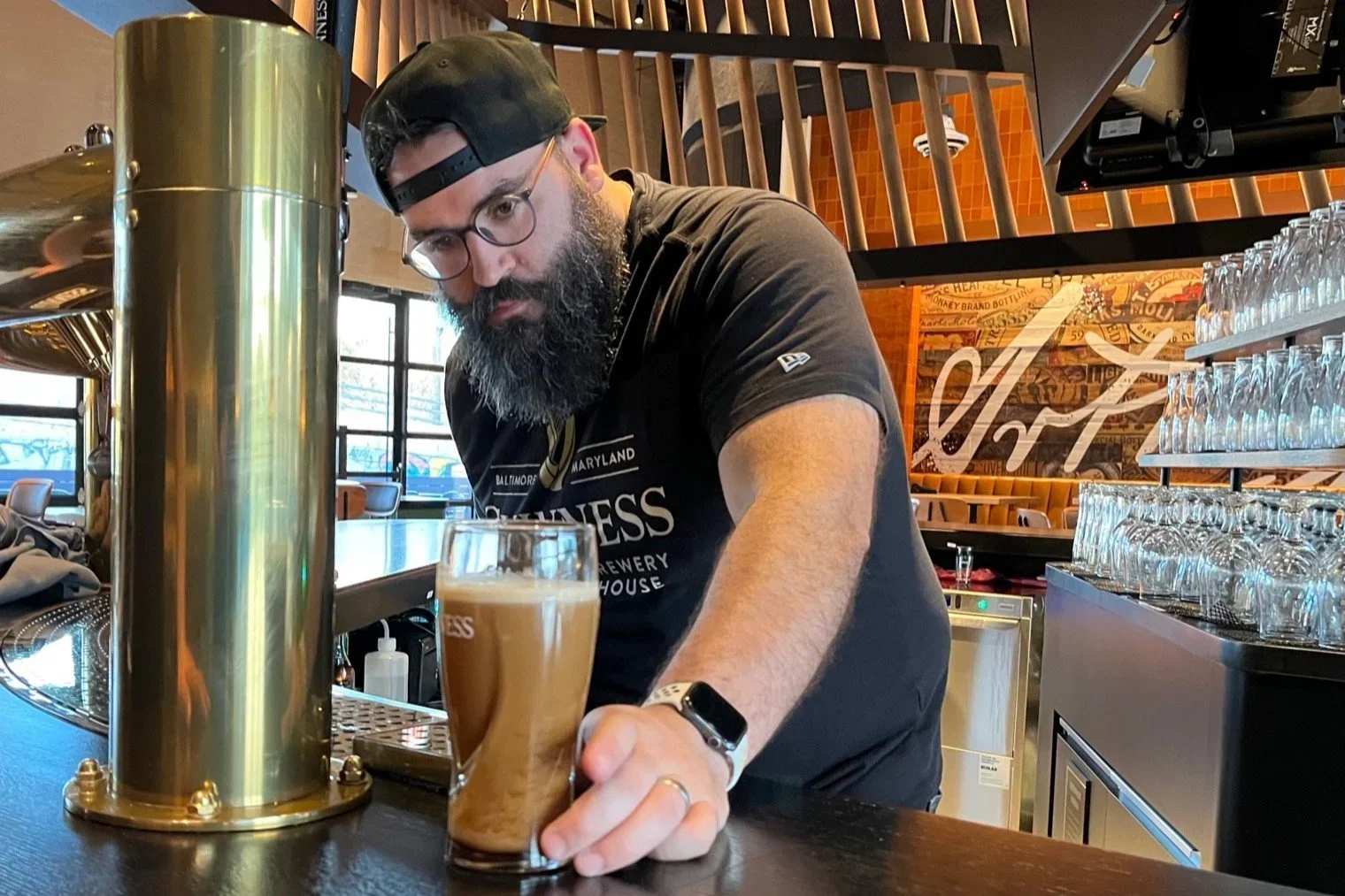
A couple months back, I joined an old friend and some future friends for beers. They were part of the extended Guinness cinematic universe (as am I!—please note that they have been a loyal sponsor and supporter of this site for going on a decade). We visited three pubs but drank the same black liquid, in rounds that seemed to arrive with increasing velocity. I was a bit startled when the first round arrived and everyone immediately took deep swallows, slamming their glasses on the table in a blend of pride and curiosity to see how well they had split the G. I declined, citing age.
We were out for a celebration, and you know it was a good one because I don’t have a single photo from the night. My friend, who can identify himself or not as he wishes, is about to go through a big life transition, and we were making sure this voyage started with a proper Christening. Over the hours we spent chatting and offering hot takes, the conversation turned to Guinness periodically, and reminded me that I haven’t taken the opportunity to ruminate on the biggest success story in beer these past couple years.


Guinness, as you must have seen, is on a huge winning streak. Sales are up 14% and at one point the brand was so hot Guinness couldn’t make enough beer, leading to rationing. This growth was fueled by young drinkers—imagine that!—who concocted the whole worldwide G-splitting phenomenon and built on social media. To top it off, a sparkling new Open Gate brewery recently opened in London.
It’s a big contrast to the mood of the company when they first came on as a sponsor for this blog nine years ago. Spirits and craft beer were soaring then, and I kept hearing rumors that parent company Diageo might spin off its Guinness division to focus on spirits. Selling breweries was a trend then, as was American-style craft beer, and dowdy 257-year-old brands were on the outs. Now Guinness is the crown jewel in the empire. (One of the reasons for having a diversified portfolio is exactly this dynamic: trends will shift, and some of your products will decline but others will heat up.)
These rumors astonished me. Guinness was one of the strongest brands in the world, never mind a blip of slowing sales. Give a brand centuries to live, and it will experience fallow times. Unfortunately, I didn’t write a post about my thinking at the time, because it was a rare occasion on which I was right about the future. You’ll just have to take my word on it. But I did tell folks at Guinness to keep the faith then, and I was pretty sure the brand would enjoy a renaissance. All it took was a war in Europe, a pandemic, and the tarnished luster of craft beer.
The Value of Age
Guinness achieved that rare feat of becoming a brand that far exceeds its industry, achieving real cultural currency. It is such a profoundly strong brand that it is synonymous with an entire country—the one in which its St. James Gate Brewery is the single most popular tourist destination. Every one of the best-selling beers in the world is a pale lager—except Guinness, and you can find its harp adorning windows in Irish pubs around the world.
It’s the kind of brand you can’t build in years, and not even a few decades. It is the result of the sort of accretion only time allows, floating at the center of rumor and romantic fact. Its old ads and slogans have become part of our collective culture and consciousness, and the ritual of the pour has become something just short of a sacred rite. It isn’t just a drink; it is a collection of stuff both physical and ephemeral that has touched beer drinkers on every continent. Most of these assets are impossible to conjure out of thin air. They require great expanses of time, a ton of work by the company, and the slow acceptance by a population of the brand as something more important than a mere product.
The stuff people know about Guinness already makes it one of the most well-understood brands in the world, but it dwarfs the history they don’t know—and it is a rich vein the company can mine at any moment. Their flagship product has been stable now for over sixty years, but it has been evolving for two hundred. The approach to the brewery takes visitors through alleyways bounded by vast tracts of gabled warehouses. These contain the industrial-sized oaken vats in which stout once aged. Visitors don’t see the roastery on site, but it’s there, churning out the black unmalted barley that is one of the signatures of the flavor. Even the nitro surge and that ritual of pouring have their own amazing backstory. All of that history, seen and unseen, permeates a brand that has been a constant in the lives of generations of beer drinkers.
People Return to Great Brands
No company in the world can always be on the leading edge of popularity, perpetually driving trends and growing. The beer industry, going back many centuries, alternates between periods of growth and innovation and stasis and decline. Starting sometime around the late aughts, beer entered a period of change and innovation, reaching its peak right around that moment Guinness agreed to sponsor this site.
Especially in the 2010s, “craft” drove the beer industry. It was a model molded in the U.S. and exported globally, and it included some key features purpose-built to undermine legacy brands (you know the list: novelty, experimentation, taprooms, a focus on local and “hand-crafted,” and of course hops, hops, hops). It was a hard time to be an old brewery, and even I may have written a death-of-flagship post or two.
Things always change. Even if Covid hadn’t scrambled the brewing landscape, there was no way we were going to stay in that phase of constant change. People get exhausted, even without society-wide turmoil. Add a little pandemic and a dash of political instability, however, and people really return to the old, comforting ways. When they did, there was Guinness. The best breweries—Sierra Nevada, Allagash, and New Glarus also spring to mind—managed to survive the period of craft novelty by retaining a positive impression even when they were not driving the zeitgeist. Add Guinness to that list.
Periods of explosive innovation and growth are necessarily short. No trend can stay hot for long. For older, established breweries, the trick is sticking to your guns, and expanding in ways that support rather than undermine your core legacy while waiting out the boom. Those who do that successfully—and I watched this dynamic happen in the late-90s and early aughts—can survive. When the boom ends, they’re in a fantastic position of making their rediscovery seem fresh all over again.
No one at Guinness predicted that a bunch of young drinkers, TikTok apps in hand, would spark a sensation around drinking their beer. But if you had asked which kind of brewery would be the one to benefit from this phenomenon, it would have been one like Guinness. It is one of the few breweries that focuses on draft, placing itself at the center of young people’s social lives. It’s a popular enough beer that people across the world can join in the game. And it’s a beer that already has a dense culture around drinking. (Indeed, splitting the G is a way of gamifying a much older habit of drinking Guinness.)
It was lucky that Guinness was the beneficiary of this grassroots phenomenon, but it was also something more than luck. Guinness has been a well-tended brand that tells its own story through good times and bad. They could never do anything about the state of the larger industry or how well they fit in it at any given time. But they could continue to tell their story, encourage people to develop a relationship to the brand, and make sure it remained a comforting homey place for them to return to.
Today, that’s where people want to be. The world is unstable, especially for young drinkers who spend half their paychecks on small apartments. Young people are threatened by more dangers than any generation in decades: huge college debt, a machine-learning era that may eliminate entire sectors of jobs, climate change, political instability, the corruption of media and the vitriol that marks society. This is not a time for risk-taking. It’s a moment when people are taking refuge in safe ports and reliable brands. Guinness isn’t alone in this appeal—the popularity of old Mexican brands follows the same script—but it has the advantage of being a 4.2% black ale that comes with a helping of theatricality and a creamy head. It is both safe and different from other global brands.
Ten years ago, Diageo almost lost its nerve and forgot the lessons of Guinness’ long history. Fortunately, they went a different direction, building new breweries while investing in telling the story of their heritage. Today it’s paying handsome dividends. Guinness won’t keep growing forever. It never has. But with a little care and tending, it should remain healthy for decades to come. For American breweries now entering their third or fourth or fifth decades, it stands as a case study for long-term survival.