MOAR Fresh Hops!
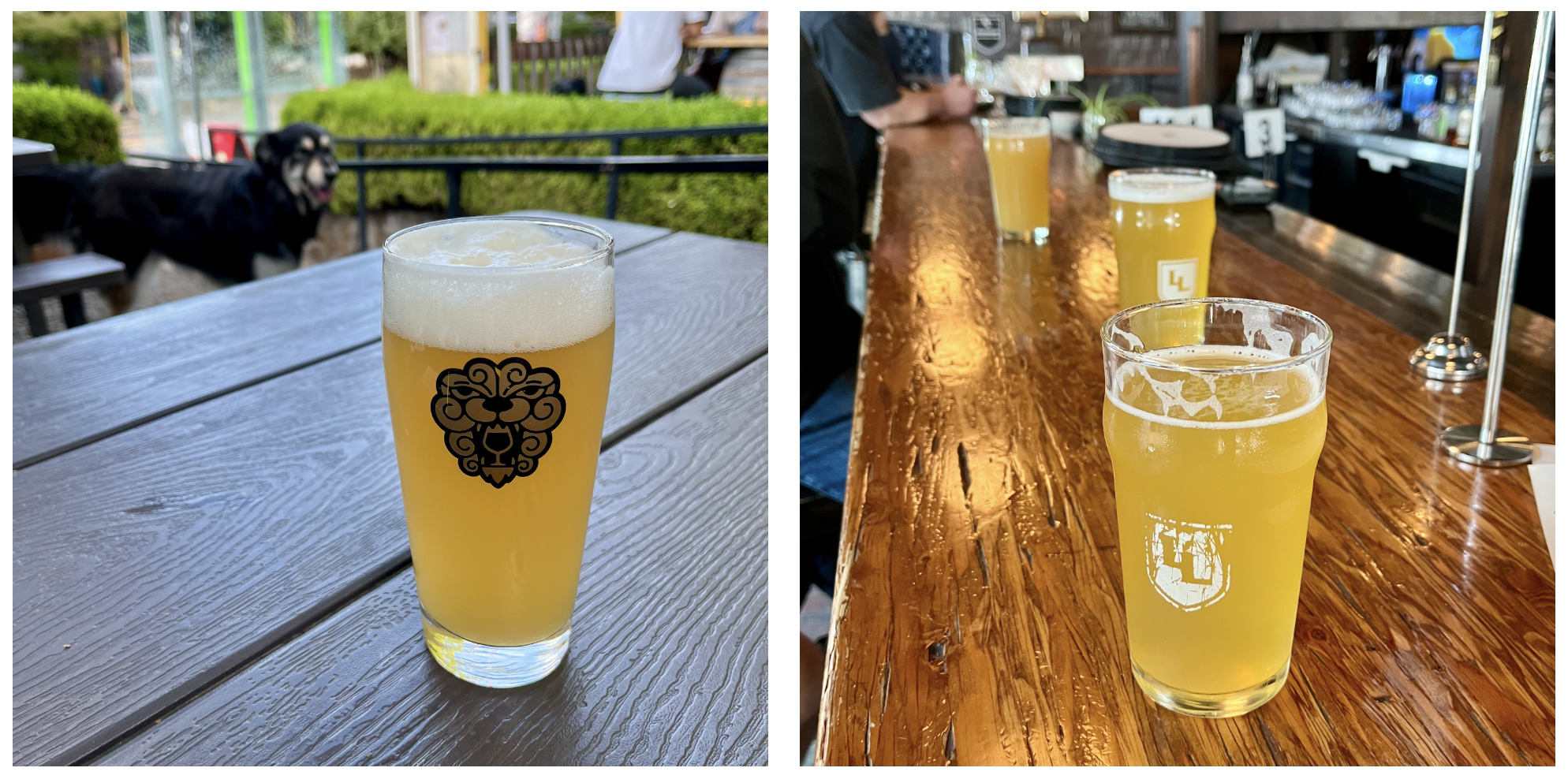
Little Beast Frieda (left), and a row of fresh hop beers at Loyal Legion (right).
The hop harvest is well underway—in Oregon, it’s actually nearing the end—which means our annual season of fresh hop beers has arrived. I have gotten off to a comparatively slow start, with a tally of just seven pints thus far—though that also mirrors their availability. They start with a trickle, and by the middle of September become a torrent. I will pick up the pace.
The point of this post will be a complaint, but let’s kick things off with a positive: Little Beast Frieda. This is my standout beer so far this year, and it may survive as my fave even if I have another three dozen. It’s a hazy IPA made with fresh Simcoe and a dab of Idaho 7 cryo. In my experience, hazies are not the optimal vehicle for fresh hops. You’re already dealing with an intensely hoppy beer, so the green character of the fresh hops can fade to the background. That happened here a tiny bit, but no matter—the beer is too good to quibble. It had a dominant note that contained elements of orange, tangerine, and mango, all soft and sweet. It had hints of chlorophyll and that slightly vegetative quality of unkilned hops, and they gave the beer a bit of tooth so it didn’t collapse into its own sweetness. It was sublime.
Little Beast should therefore be on a short list for those of you nearby—and they have other, also excellent fresh hop beers as well.

Now to my complaint. I noticed this trend last year, and it seems even more prominent this year: breweries using fresh hops as an accent in beers with high loads of conventional hops. The effect is a diminished or absent fresh hop note (in what may otherwise be great beers). During fresh hop season, I don’t merely want great beer, though; I want beers that glow green. As breweries begin to downplay the fresh hops, this worries me.
I have a few theories as to what may be going on, and I offer them as an invitation to discuss. Brewers in particular, if you’re willing to comment, please add details and info. In the meantime, my speculation:
Cost. Fresh hops are quite spendy. On the one hand this is great, because it means hop farms are getting direct infusions of cash, rather than selling their hops on wholesale to brokers. Yet it may also cause brewers to fill out the profile with cheaper conventional hops. (Keep in mind that undried hops have all that water weight and are 6-7 times heavier per cone than dried hops. Or put another way, if you’re getting just 15-20% of the hop matter in a given pound of fresh hops relative to conventional hops.)
Habit. I don’t know if you’ve noticed, but brewers don’t make many single-hop beers anymore, especially in the IPA family. They’re used to painting their flavors and aromas with a palette of multiple varieties and types (including hop products) to give their beers a rich, complex profile. It would make sense that they’re doing the same thing with their fresh hop beers, which diminishes their prominence.
Process. There’s a big debate among brewers about how to use fresh hops; as a dry-hop addition, or in the whirlpool. Because these additions come at different parts of the brewing process—days apart—breweries have to choose which path to take. The prevailing view is that using fresh hops on the hot side creates a more pronounced flavor, though brewers differ on whether it’s a better flavor. The first beers out in the market are always made with dry hops, so my sample has been biased toward cold-side fresh hop beers.
Variety. Only a minor factor at best, the “green” character of an undried hop does vary both by variety and year. In Oregon, the earliest hops out of the gate are the classic old-school lager-type hops, which pack less of a punch than, say, Strata (which is also an earlier hop). But in past years, I had some amazing lagers made with these hops that were vividly green, so I’m not hugely convinced by this explanation.
In conclusion: brewers, use MAOR fresh hops! Make them glow green! And drinkers, the real takeaway here is that fresh hop season has begun, and you should be out there sampling these beers (if you can) and arguing over them. Now’s the time!
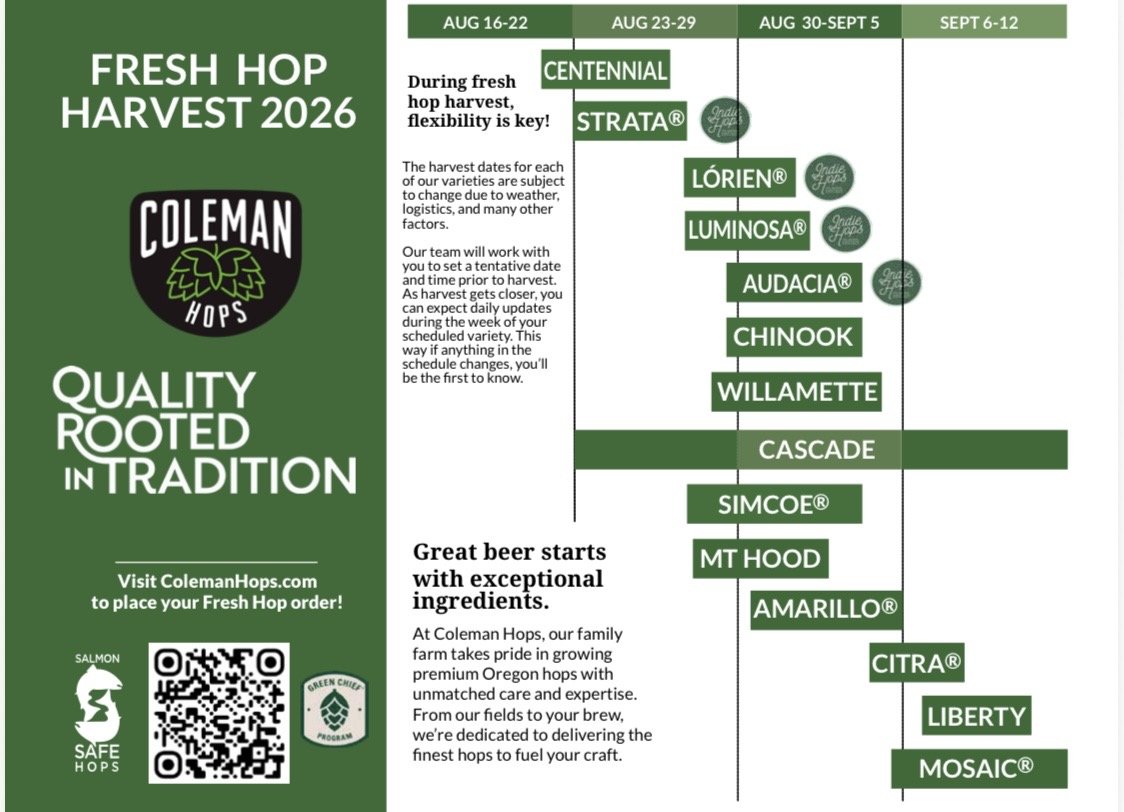
(As a parting gift, here’s Coleman Agriculture’s 2026 hop-harvest flow chart.)