Magic and Sufficiently Advanced Technologies
I recently co-published a book. It is not about beer, but represents the culmination of a project that began more than twenty years ago. Please read on—this has been a small but persistent part of my life for a long time (and gamers, definitely read on).
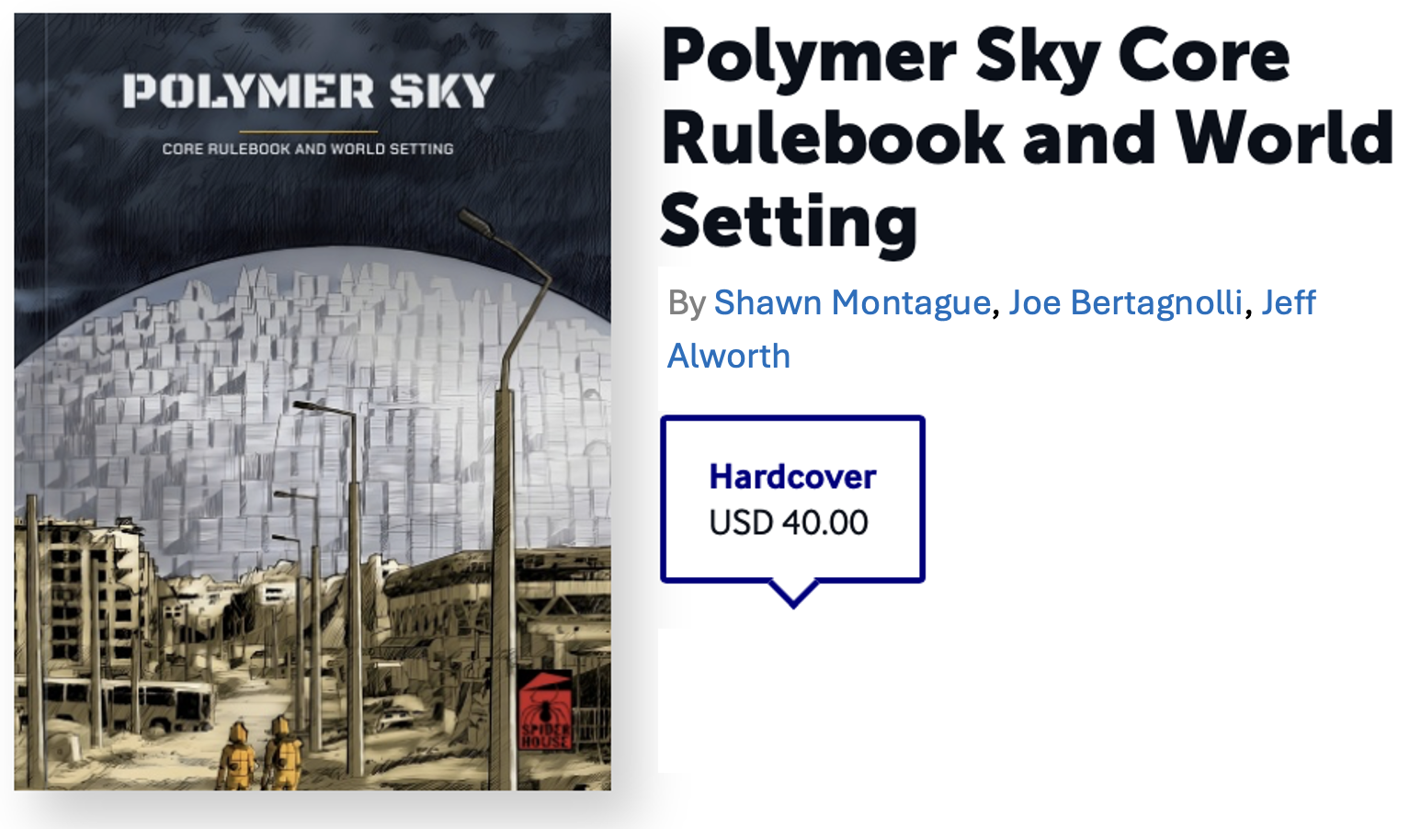
I want to tell you about two elements of the project, but let’s start with the book itself. It is the rulebook and world setting for an old-school, pen-and-paper roleplaying game. Set 300 years into the future, it takes place in a post-apocalyptic earth. Confronted by the dangerous effects of climate change, 21st-century governments undertook a botched effort to geoengineer the planet. It hastened climate collapse, leading cities to erect biospheres to protect themselves from the poisoned atmosphere. The name of the game, Polymer Sky, evokes that thin membrane that has become the limit of their worlds.
In this post, I’ll tell you a bit about the book and its background. I will devote a future post to how this book came to be, which is itself a surprising story about future technologies. But I would be remiss if I didn’t encourage you to buy a copy of the book. As an inducement, I’ll throw in a starter adventure module for free. I can even send a digital copy of the book if you prefer one of those at the table. Once you buy the book, just shoot me an email and I’ll get you what you need. You and your gaming groups will have all you need for hours of entertainment. And, for those curious about the gaming system specifically, I describe it at the end of the post.
Toward a Better Sci-fi RPG
I started playing Dungeons and Dragons in college in the late 1980s. This was just after the moral panic about satanism and D&D, when the game was a terminally embarrassing activity mainly the province of socially maladroit nerds. One member of our group went through multiple months-long relationships with women who never learned about his secret shame. Today, roleplaying games are enjoyed by all, with none of that ‘80s residue, which remains a (very welcome) marvel to me. I love visiting places like the Lucky Lab and TPK, where tables of gamers enjoy themselves right out in the public.
In 2026, you can’t swing a dead cat without hitting an indie sci-fi RPG, but in the 90s, options were limited—and flawed. Game designers could never quite get the balance right between advanced technologies capable of enormous destructive potential and the fragile human body—the games were just too lethal. It is much easier to manage that balance when you’re dealing with daggers and swords.
We didn’t always want to play in a fantasy setting, and so, lacking better alternatives, two of my friends and I started developing our own sci-fi system. We hit on the idea of domed worlds where technology could be both futuristic but also controlled. Although we set our game in Portland, we imagined that each domed city would be a unique ecosystem. Cut off from the rest of the world, they would develop their own technologies, political systems, and cultures. And the enclosed space gave us a game-balance kludge: most cities wouldn’t allow weaponry lethal enough to damage the biosphere, which would keep that part of the game in check.
Over more than twenty years, we built out the system, tweaked it, and ironed out the wrinkles. We were very proud of it, finding that it did manage to strike the right balance. The biosphere becomes a sandbox for game play. In the Portland setting, corporations had taken over the city, which had a blend of dystopic Orewellianism seasoned with some wild-west free regions. We had old-fashioned shoot-’em-up campaigns, but unlike D&D, we were not nearly as bound to them. We had a murder mystery (that’s the prepared freebie I can offer you), a world-discovery adventure in Seattle, and a political uprising. The game, which is designed with simple rules, maximized the role-playing and collective storytelling we prize, while limiting complex game mechanics and those dreaded two-hour battles.
Trying to Take it Public
We thought it was a cool enough system that about a decade ago we planned to launch it as an official indie RPG. We hired a lawyer, purchased trademarks on Polymer Sky and Spider House Games (our “company”). We hired an illustrator, Stephen Korbich, and paid him for an initial small batch of pictures. We built a webpage and started prepping a Kickstarter. The one extrovert in the group took our mock-up around to several local game shops and previewed the system with real-life gamers.
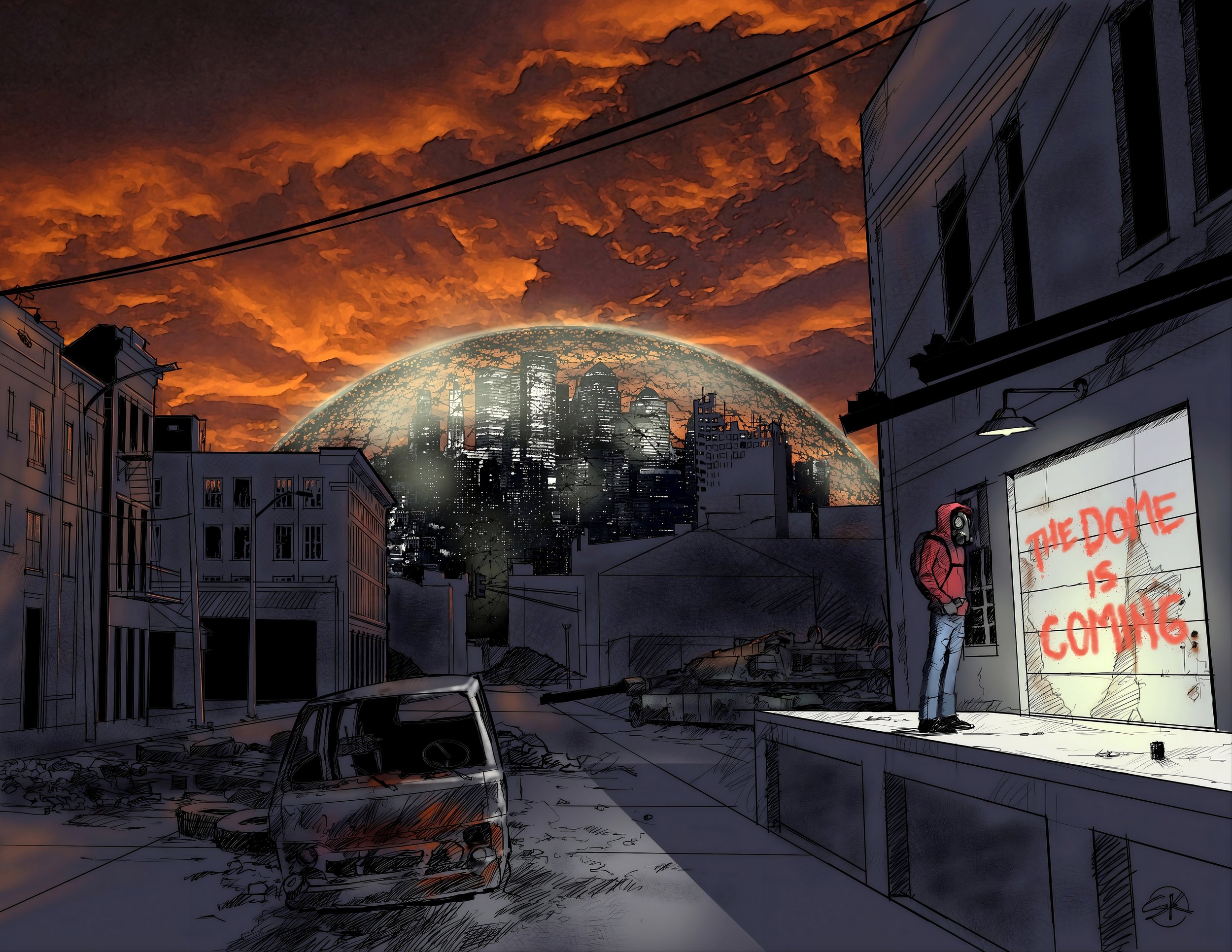
In one of our most ambitious gambits, we launched a fake news site that detailed the last days of the livable planet. With headlines like: “Wild Salmon Declared Extinct”, “Should Nano-Juicing Be Allowed In Pro Sports?”, “Polymer Technology Stocks Rise Despite Stock Market Woes”, and “Hastings Corp Acquires Two of Remaining Three Blocks in Portland” it was a prequel to prepare readers for the setting they’d find 200 years later. We were going to launch a viral campaign with the tag line “The dome is coming…” to generate interest in the world and the gaming system.
I contacted Rachel Bell of Portland’s Overcup Books. In addition to regular publications, Overcup also does white-label publishing (is that the right term?), and she could edit, design, print, and sell our book when we were ready to go. Everything was in place.
And then … life intervened. You know me, and you may remember that I was busy launching myself as a book-writer in this period. The other two-thirds of the team was just as busy. Shawn Montague’s life as a software engineer was taking off, and he had two small children at home. Joe Bertagnolli, a suicide-prevention psychotherapist at the VA, was not just managing the stress of his regular activities, but increasingly speaking to VA outposts nationwide about a program he had developed. We were barely keeping our own lives together, and none of us had a spare minute to devote to Polymer Sky.
Things petered out. Earlier this year, when we got the annual bill from our attorney for keeping our ghost company alive, we decided to call it quits. But then, as a lark, I wondered if Anthropic’s Claude could take our text manuscript and turn it into a publishable book (albeit a skimpily-illustrated one). That’s the process I’ll discuss in a future post, but the answer was yes—it could edit and lay out the book for publication on the print-on-demand site Lulu. That’s what we just released, and I have to say, it looks awesome.
All About Polymer Sky
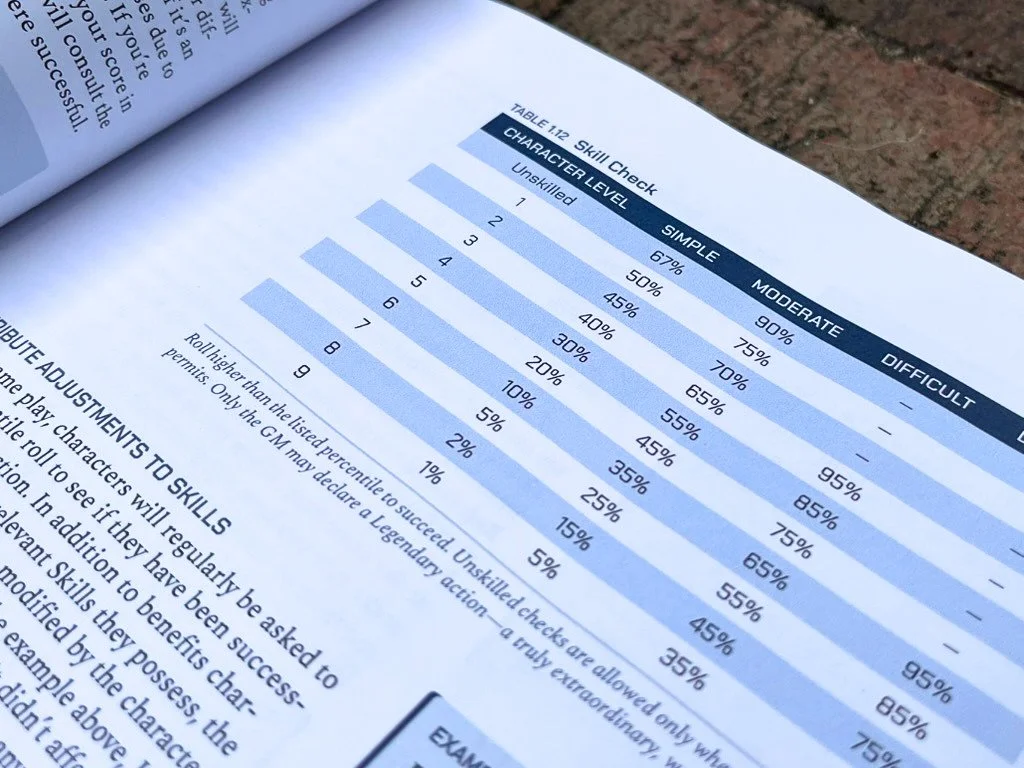
The book we published contains two parts, the game system and the Portland 2415 world setting. The game system is simple and intuitive. Except for some weapon damage, all roles are percentile checks, and you always want to roll high. Characters acquire skills rather than choosing a class (like D&D’s wizards, clerics, and warriors). That way you can pick up unrelated skills like shooting a pulse gun and hacking computers as you wish. Many of the acts in the game can be attempted without the attendant skill—albeit with some penalty. We designed it with maximum flexibility in mind.
One of our innovations is “notoriety,” which measures how well-known a character is. This emerged naturally during gameplay, when we realized that if characters did something especially splashy or criminal, it should have an effect on the way they navigated this highly-surveilled city. Some characters will want to gain notoriety, while others will want to shed it. It adds a fun dimension to the game.
Polymer Sky has lots of fun tech and gadgets, including the flying vehicles we never quite seem to get in our timeline. It has robots, high-tech (but low-lethality) weapons, and endless surveillance and counter-surveillance gadgets. When we were inventing tech in the early aughts, some of it seemed more futuristic than it does today. “Externals,” or computer-enhanced glasses, are how we had people navigate the world. It was more cutting edge than it seems today, as Meta and Apple offer rudimentary versions of them. (A related technology is the implant, which is wired directly into the brain.) Finally, people eat nutritional supplements mostly, but a whole culture has built up around various teas, psychoactive and not, that people drink in teahouses. Beer drinkers may see a futuristic echo in that element.
And it’s ripe for expansion. Want to set you campaign in Tokyo or New York? Awesome. You can skip the Portland stuff and begin inventing your own tech and dome. We had even planned to work with people who created cool world settings to co-publish them and add them to the canonical world setting. Just something to keep in mind, you Seattle domers. 🙂
That’s it—our grand, once-abandoned and now reanimated project. We still don’t have the time to market and sell it in the way we would like, but it would make the three of us very happy to know folks are out there playing it. So if you’re curious at all, make an old gamer’s day and grab a copy.