Visiting Rodenbach Brewery
I am trying to take a bit of time off, and although I’m away from the computer, I’ll try to leave you with some amusement in my absence. Today’s nugget from the archive is post about my visit to Rodenbach back in 2011. (I can’t believe that much time has passed!)
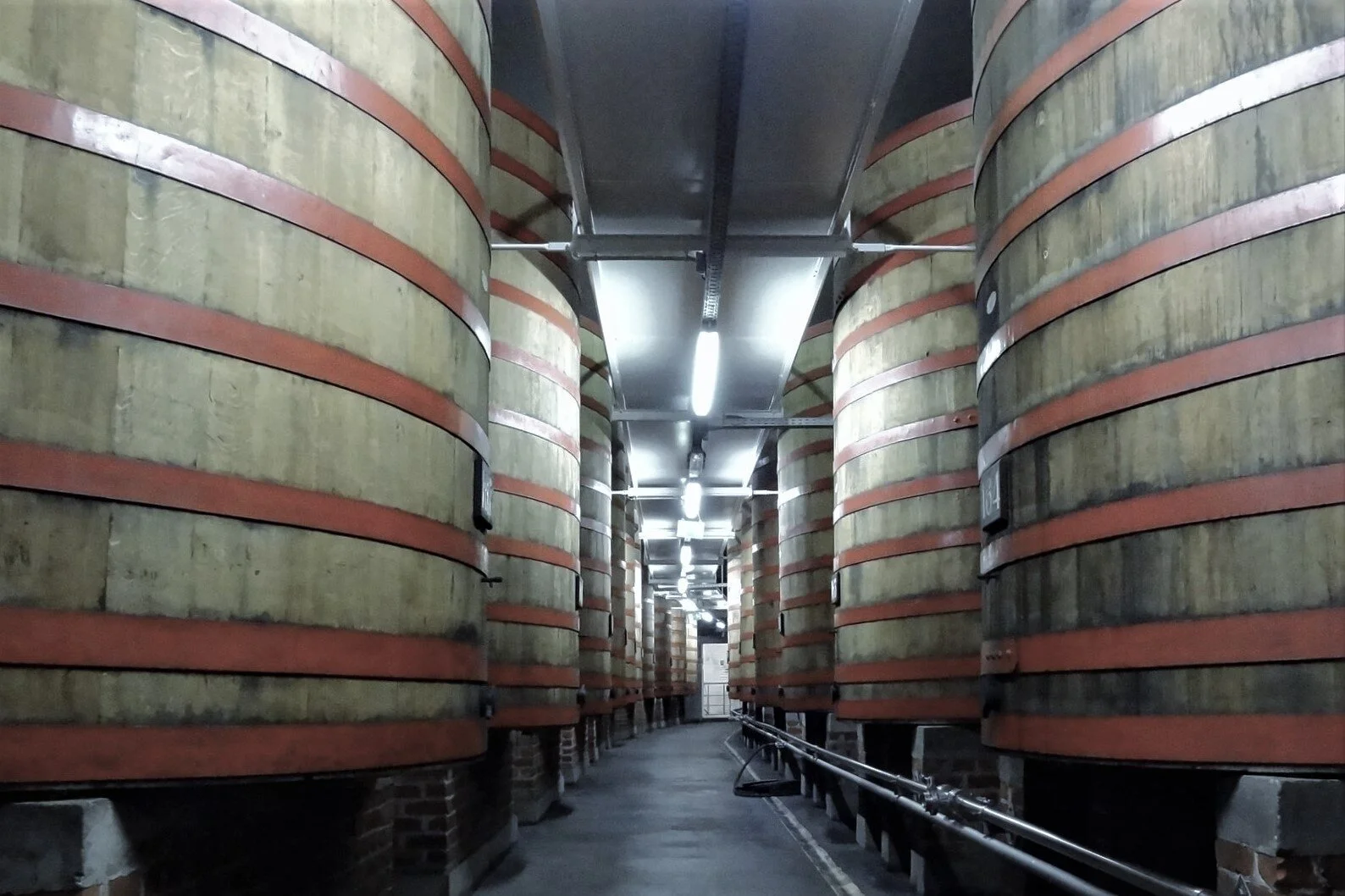
When Rudi Ghequire, the master brewer at Rodenbach, took Sally and me on a tour of the brewery, we spent less than ten minutes in the actual brewhouse. We spent a similar amount of time on the history of the brewery (history is a big deal at Rodenbach) and a few minutes on fermentation. But our tour lasted two hours. The remainder of our time we spent inside the maze of cellars that contain the massive vats of aging beer.
It reflected the emphasis inside the brewery. Rodenbach takes care making its beer--the new owners, PALM, just spent a boatload of money on a beautiful new brewery--but what happens in the mash tun and kettle aren't primary. The real action happens in those famous wooden vats. Rodenbach brews a single base beer--a sweet, red ale made with 20% corn and roasted barley. Fresh, it is very sweet, and the hops are used to retard bacteria, not balance the beer (they fall below the threshold of taste). A portion of the beer is then put in the vats and left to age there for a full two years. When it has fully ripened, it's blended back with fresh beer to make regular Rodenbach (25% aged beer) and Grand Cru (67% aged beer). What makes Rodenbach Rodenbach is what happens in those vats.
There are 294 of them altogether, and they're housed in ten vast cellars that can hold up to 33 each. Many of them are very old; the brewery says "older than 150 years" but they've been saying that for a while. The three oldest date back to the 1830s, if I'm hearing my audio tape correctly [!]. The brewery has its own cooperage, not for building the vats, but maintaining them. This is how their version of an acidified red ale has been made for well over a century. Inside the vats, a happy little colony of wild yeasts work away for months, adding lactic acid to the beer and dropping the pH. This is where Rodenbach is truly made.
For those who know their history of English brewing, Rodenbach's methods will be familiar. It's how the great London porter breweries made beer two centuries ago, aging their beer in immense vats until wild yeasts had given it a refined, mature finish. I was surprised and delighted to learn that this isn't a coincidence; in the 1870s, Eugène Rodenbach went to England and learned to brew porter. He brought the techniques he learned there back to Roselare, where they're still practiced--long, long after the English abandoned those methods in porter-brewing.
When it comes time to bottle the beer, Ghequire leads a team of tasters who blend the vintage beer to get the character they want. Each vat is its own ecosystem, so the beer coming out will taste different vat to vat. (Brettanomyces is not the main culture in the vats, though when we tasted beer from one, Rudi detected it in the sample. It was too subtle for me to locate, but he knows his beer pretty well.) Once they have a final blend of vintage stocks, they will blend that back with fresh beer to make Rodenbach and Grand Cru.
Of all the breweries I toured in my three weeks in England, Scotland, France, and Belgium, Rodenbach was the most awe-inspiring. Every older brewery I visited discussed the balance between tradition and efficiency--such an important consideration for a commercial enterprise. Rodenbach is off the charts in terms of the expense and inefficiency it takes them to produce a single bottle of beer. No modern company would or could consider the Rodenbach model. The vats alone cost thousands (tens of thousands?) of dollars, never mind the cellar space. Add to that the notion of vatting beer for two years--it's an absurdly expensive venture. And yet here the brewery is, putting beer in vats and then trying to compete in a marketplace where industrial lagers can be made for a tiny fraction of the cost.
It's no surprise that the sour beers of Flanders are on the endangered species list. Very few make authentic sour red (or red/brown) ales, and none make them the way Rodenbach does. (De Struise, though it makes a tiny amount, produces a totally traditional, wood-aged sour called Aardmonnik that gives me hope--it's authentic and an exceptionally good, complex beer.) It is almost impossible to imagine any brewery will join Rodenbach in the near term, either. If we could designate breweries "world heritage" sites that could somehow never fail because of commercial pressures, I'd put Rodenbach at the front of the list. In the world of beer, there's nothing like it, and we are fortunate indeed it has survived the vagaries of wars, depressions, and modernization. If you haven't had a bottle recently, go find one and remind yourself what a remarkable beer it is.