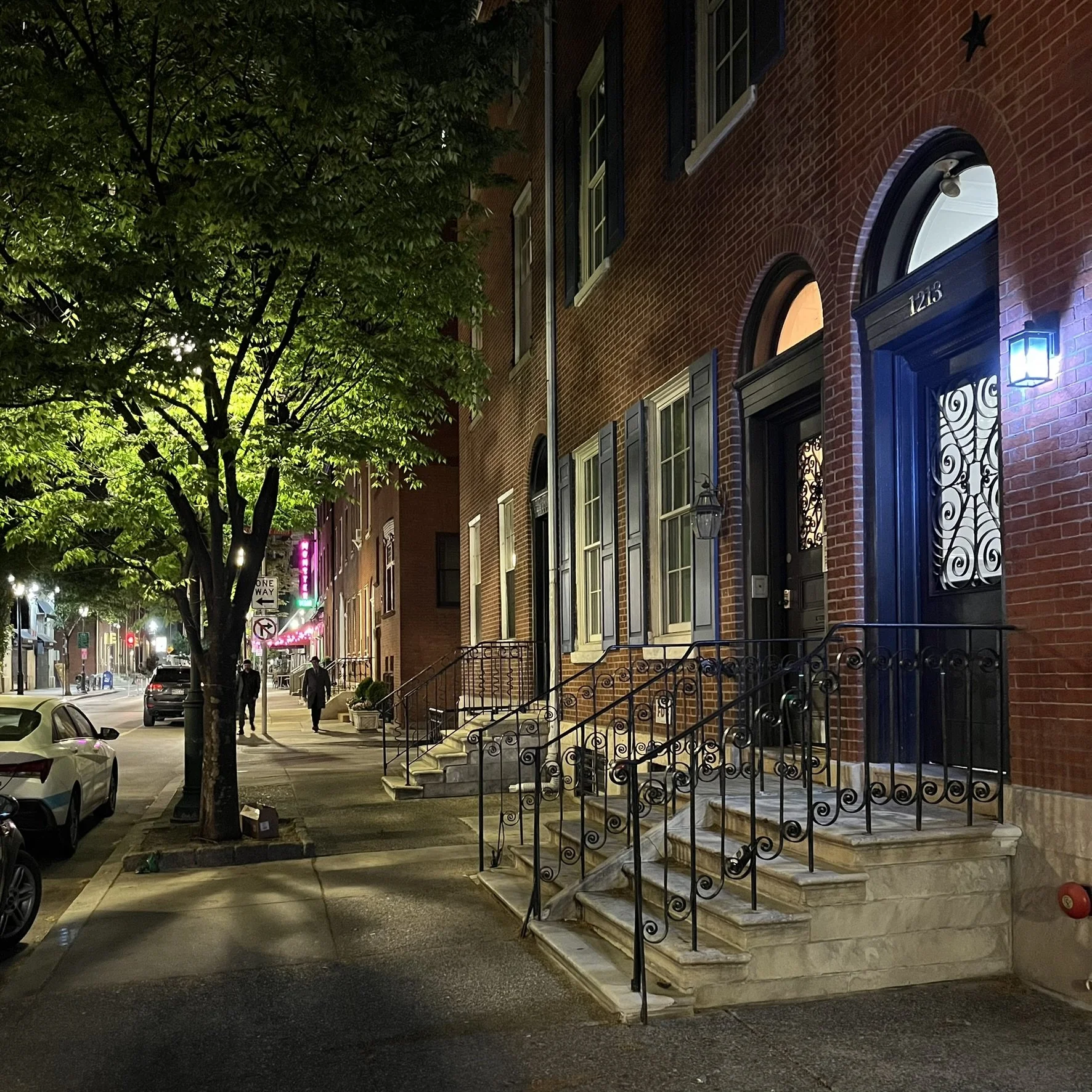
Drinking in Philadelphia
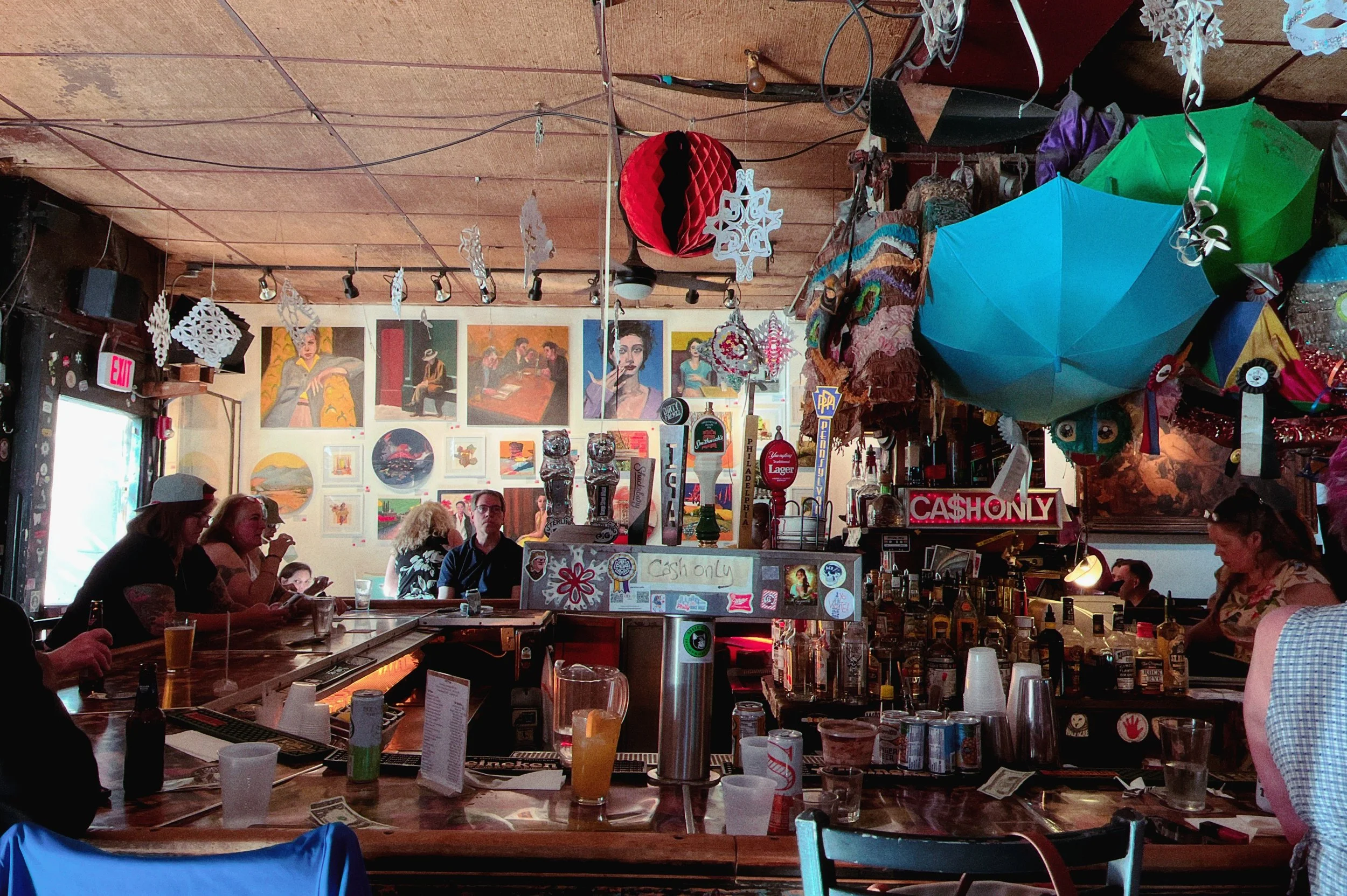
On the Saturday before the Craft Brewers Conference, I visited Dirty Franks, a dive bar in central Philadelphia. Sally and I arrived early to hang out with Portland ex-pats who had relocated there, and one of them was leading an advance expedition into one of Philadelphia’s famous dive bars. It was a sunny afternoon, and in characteristic fashion, Franks had no windows, so we plunged squinting into the darkness.
My friend Mark, the ex-pat, wanted us to try the local speciality, the “citywide.” This refers generically to a shot and a beer, but different bars offer different combos. You walk in and order a citywide and you’ll get a Tecate and tequila or PBR and bourbon—whatever that particular bar happens to feature. When Mark learned about the citywide, he was enchanted, and he was correct in believing I would be, too.
We chose Franks because of proximity. It was two blocks from the spot where we made the decision to locate a citywide. Dive bars are plentiful in Philadelphia, and it was handy. Franks isn’t named for some distant owner, nor has it lost its apostrophe along the way. Rather, it celebrates, in that dumb, awesome way of dive bars, all the Franks, from Sinatra to Ben (Franklin, get it?). Their images are a running theme of the bar, painted and framed on the walls, inside and out.


Franks is a little snooty, Mark was reminded. If you order a citywide there, they correct you: “It’s a Franks’ Special,” the bartender will say, before handing you a citywide. In the event, it’s a can of Hamm’s and something water-clear that smells of grain alcohol. (Which turned out to be a kamikaze.) Mark ordered one each for the three of us to sample on our little ethnographic exploration. Tab: $12. For all three.
Dive bars, at least the old ones, are rich in culture for the anthropologist. They tell you a lot about the city in which they’re located. Franks recently became popular with young drinkers. They came in swarming packs, which messed with the vibe. Worse, many of them were underage but bearing impressive fake IDs that could pass muster with official scanners the bar used to validate them. So Franks decided to ban anyone under 25. It seemed to be working; on our visit, I’d put the median age at 50.
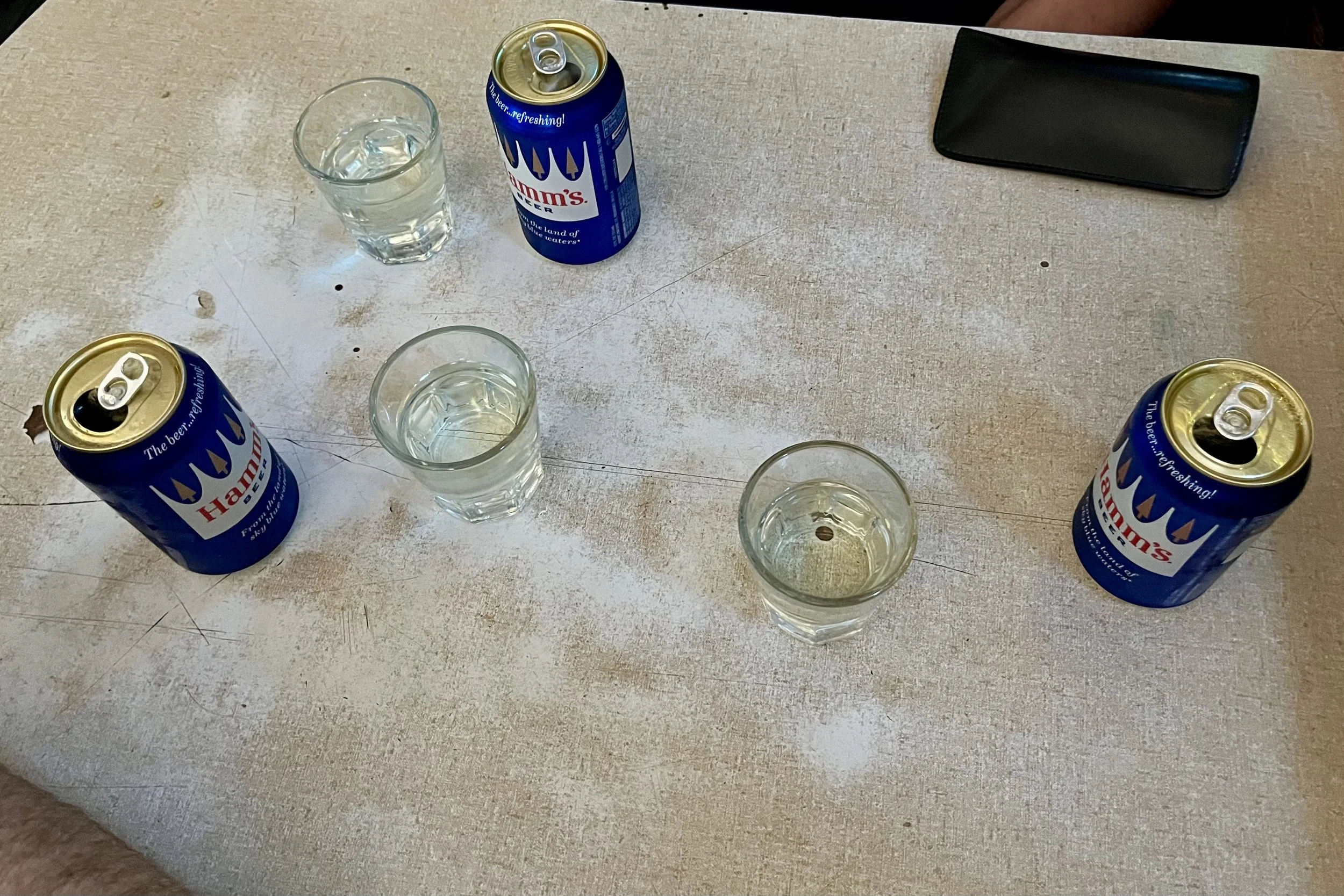
Three citywide—or Franks’ Specials—at Dirty Franks.
Franks does not serve food—typical of dive bars—and only accepts cash. None of us had cash, so Mark used the in-house ATM, which I assume charged usurious fees. (At four bucks a special, it’s hard to complain.)
Dive bars are a near-perfect reflection of economic incentives, their taplists precisely reflecting what their customers will buy. The bar served Pennsylvania-brewed Yuengling, of course, but also other craft beer. (Based on my incomplete investigations, Yuengling enjoys a contradictory status in Philadelphia: the company is the source of local pride, but no one seems to respect the beer.) I did not see a handle devoted to a national mass market lager, but of course, they had those cans of Hamm’s. Many were drinking cocktails.
A city doesn’t have to possess a fleet of dive bars to be a good drinking city, but it helps. For my money, Chicago is the best drinking city in America. It combines the Midwest’s love of drunkenness and social drinking with a big city’s diverse offerings. It is replete with dive bars—and every other kind of bar. The Chicago dive bar is often something a little less seedy than dives elsewhere (also classically Midwest), probably because so many different kinds of people walk through their doors.
Dive bars reveal a city, and not just in Chicago. In Portland, home to its own impressive stippling of dive bars, they’re a little divier, rougher around the edges. Portland is closer to its working-class past than Chicago is (it was very much intact when I arrived), but our dives have by far the best beer in the country. Visit the Sandy Hut or The Vern and you will quickly learn that Portlanders drink local beer in volume.
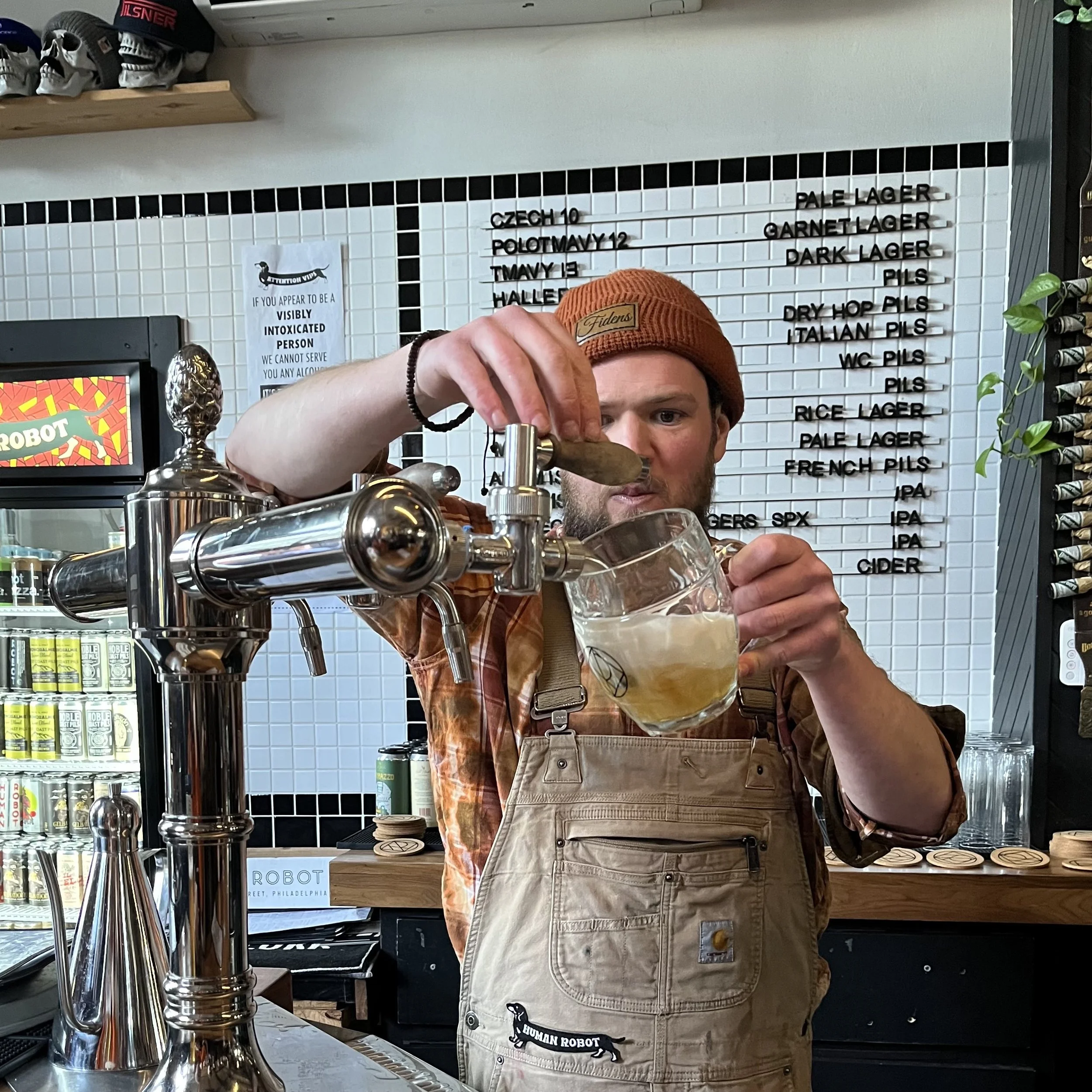
Human Robot
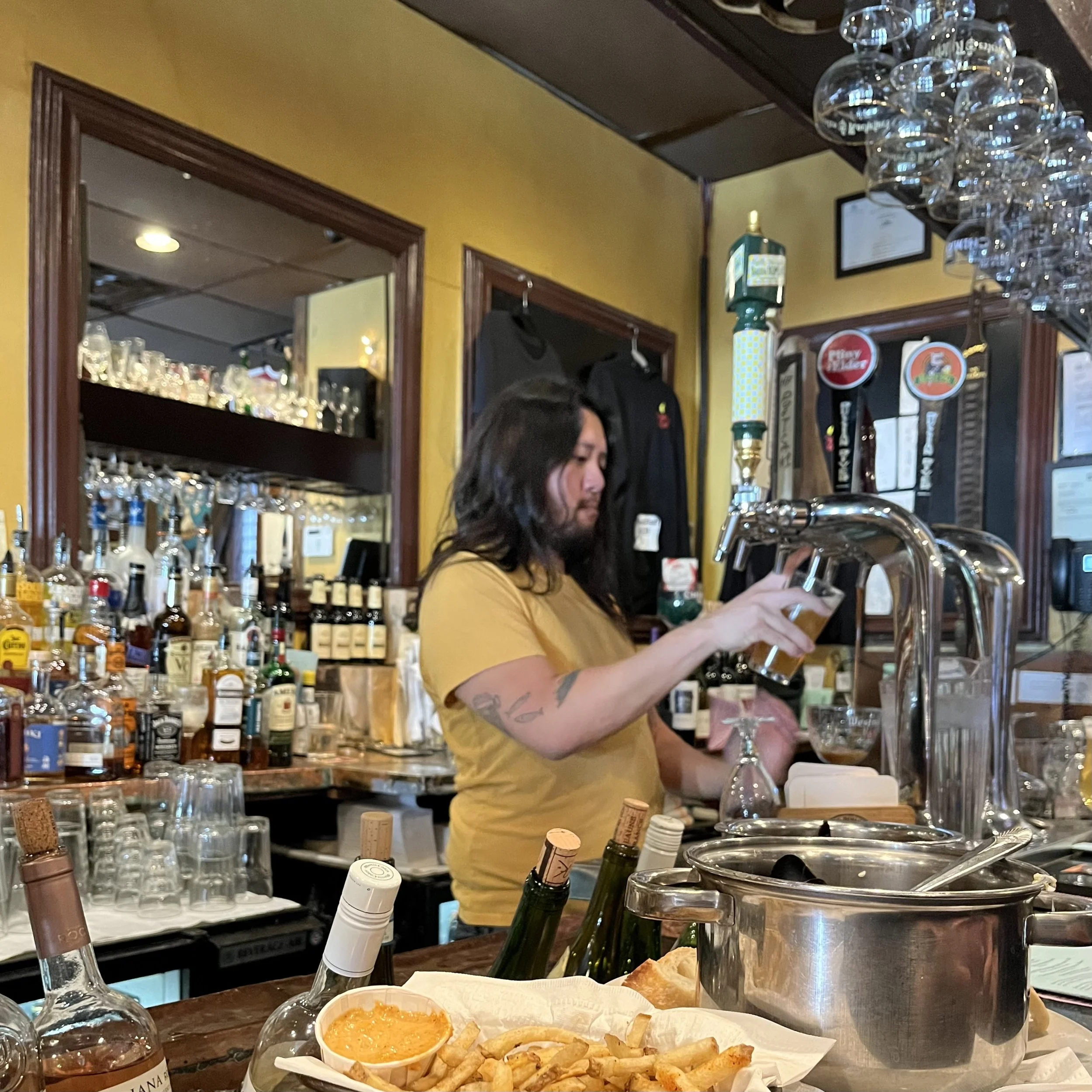
Monk’s (moules-frites in foreground)
What did I learn about Philadelphia? Pennsylvania was one of the states to embrace craft beer early. It features some of the early institutions of the era—Dock Street, Stoudt’s, later Yards and Victory—most of which have managed to trundle on into the present. I spent most of my time not drinking in breweries, and the beers I saw on tap were fairly dated. Philly has respect for tradition, and I saw more than a few old-school classics like Zombie Dust and Pliny. One of the most modern lineups I found, remarkably, was at a suburban brewpub called 2SP, which had not only a cracking rauchbier (admirably edgy for the location) but also an impressive dry-hopped rice lager.
The hottest brewery of the conference was Human Robot, where they do lagers. They specialize in Czech styles, and do a funny mlíko pour with their dark in a stange glass that people were shotgunning. (The crowd fave was the Japanese lager, but I favored their 10-degree pale.) A Czech-heavy lager brewery is very on-brand and 2026 for the industry, but those beers also cast backward. IPAs were notably far thinner on the ground than they are in Portland.
Tradition isn’t bad. On the West Coast, we have our eye on what’s around the next corner rather than lingering on what was around the last. A city more focused on tradition would have been able to keep its oldest brewery afloat, but Portland lost BridgePort by not supporting its delicious old-school ales.
A perfect example is Monk’s Cafe, an institution that will celebrate 30 years in 2027. A cozy space, it was built around the love of Belgian beer popular at the time. You can still get Saison Dupont on draft, along with Trappist offerings and some craft beer that slots into the theme. They have a list of bottled offerings so vast the compendium is collected in what they call their “Beer Bible”—which brought a grin to my mouth. Of course, their signature dish is Moules-frites. Something like Monk’s could have easily appeared in Portland (it did actually—Bazi’s), but it wouldn’t still be around. At least not with a focus on Belgians.
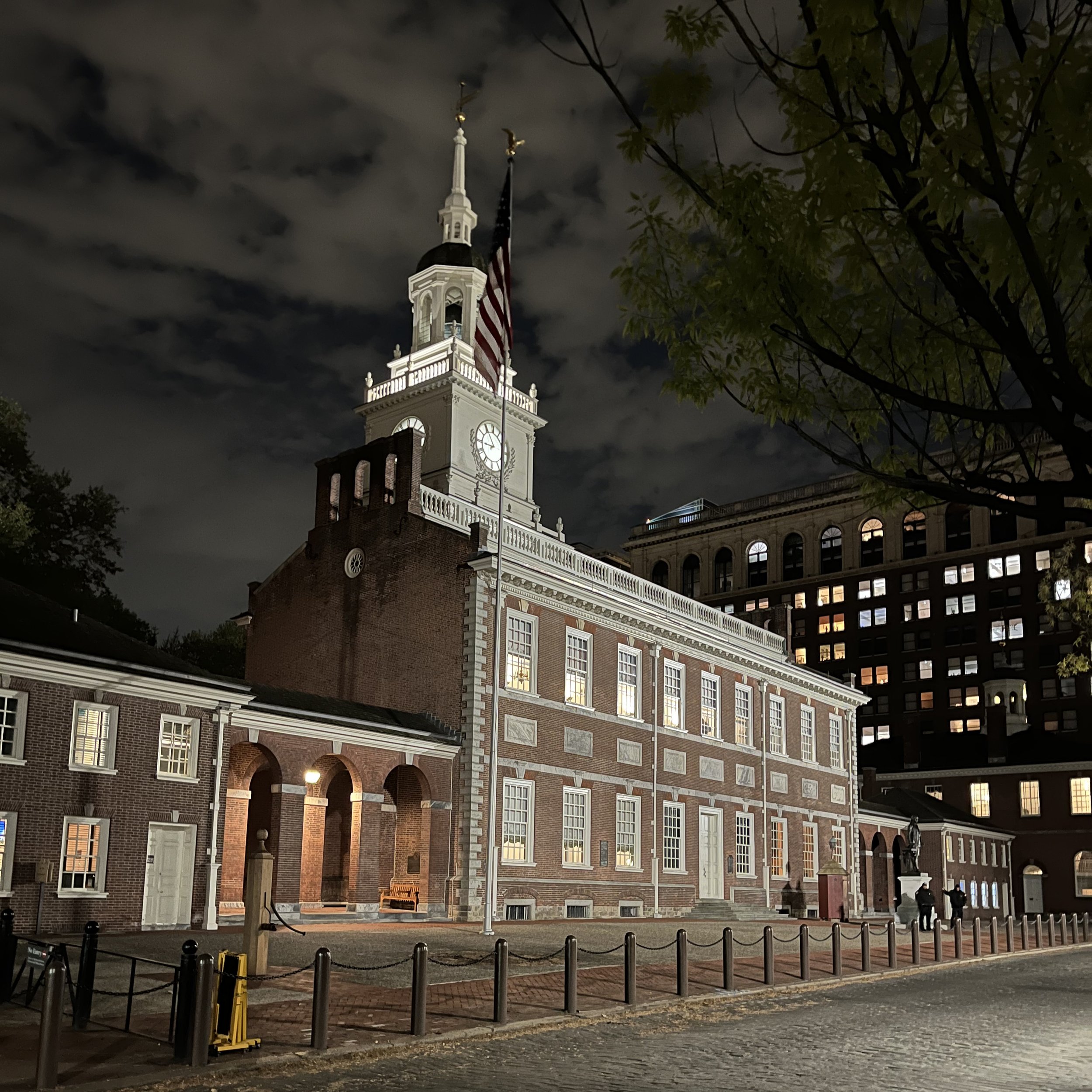
Philly’s a cool city. It’s still rough around the edges. In the historic district, modern brutalist buildings pockmark the landscape—evidence of a less gentrified time. Philly is the birthplace of modern democracy, though, and you see the calligraphic “We the People” everywhere. It doesn’t feel elite in the preserves way of old Boston or the glossy capitalist way of Manhattan. But those cities don’t have dive bars scattered across their downtowns, nor four-dollar citywides. It makes that “We the People” more than just a slogan.
Beer geeks always mention Monk’s and you should definitely go if you visit. They never mention the citywide, however, yet it may be the more important icon of the city. Make sure you don’t miss it.
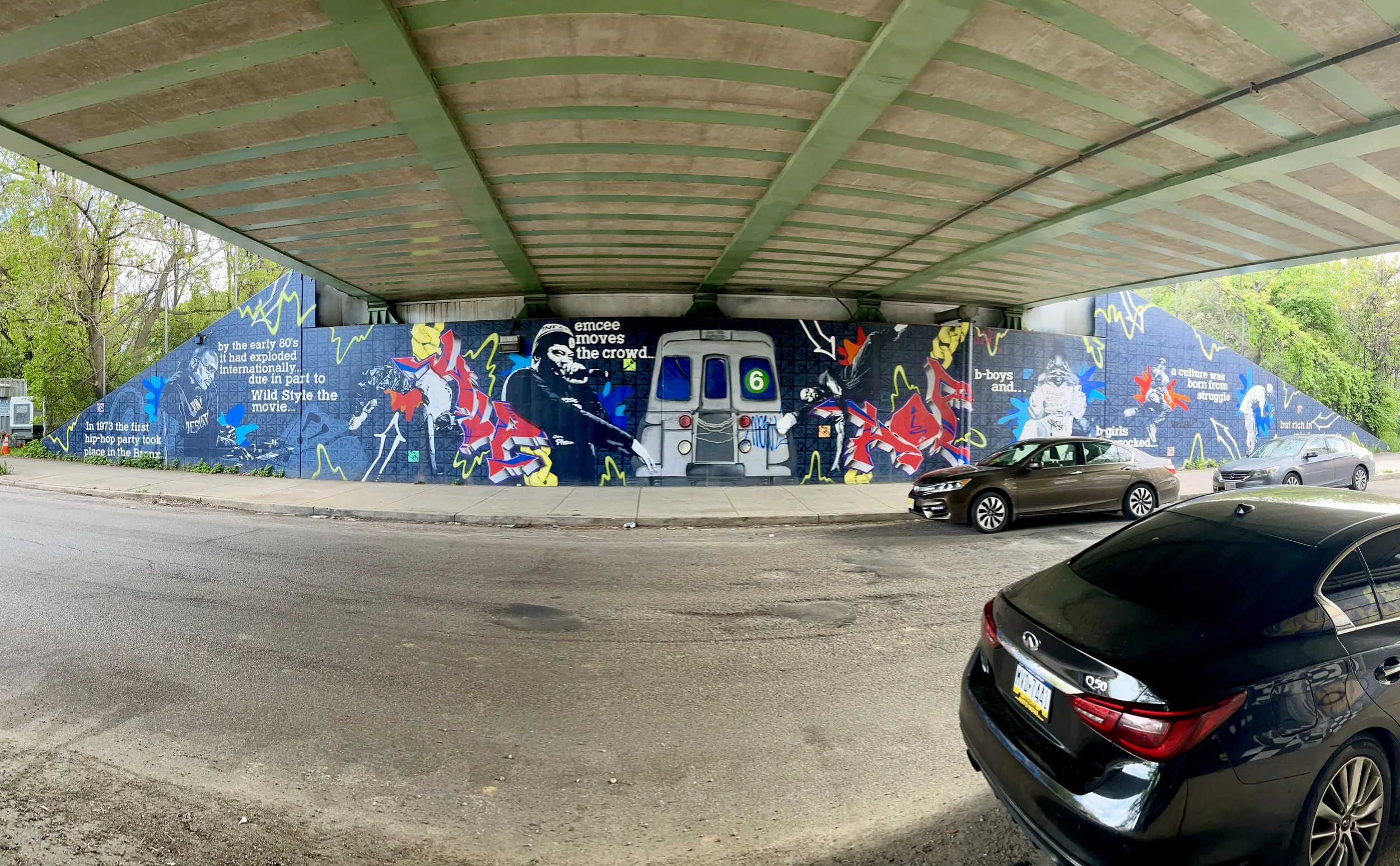
Street art
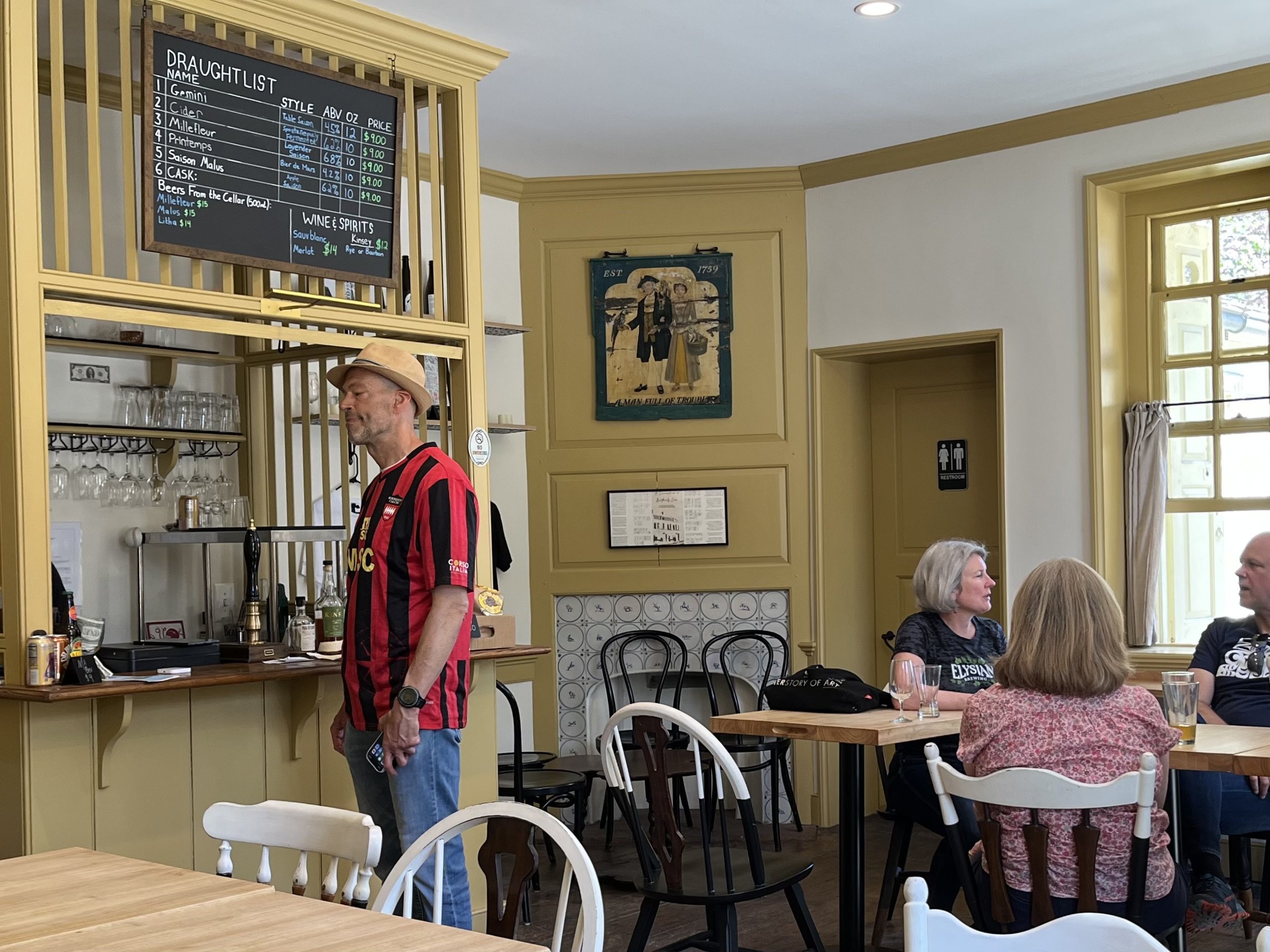
Succession Fermentory