Man, That Was Weird
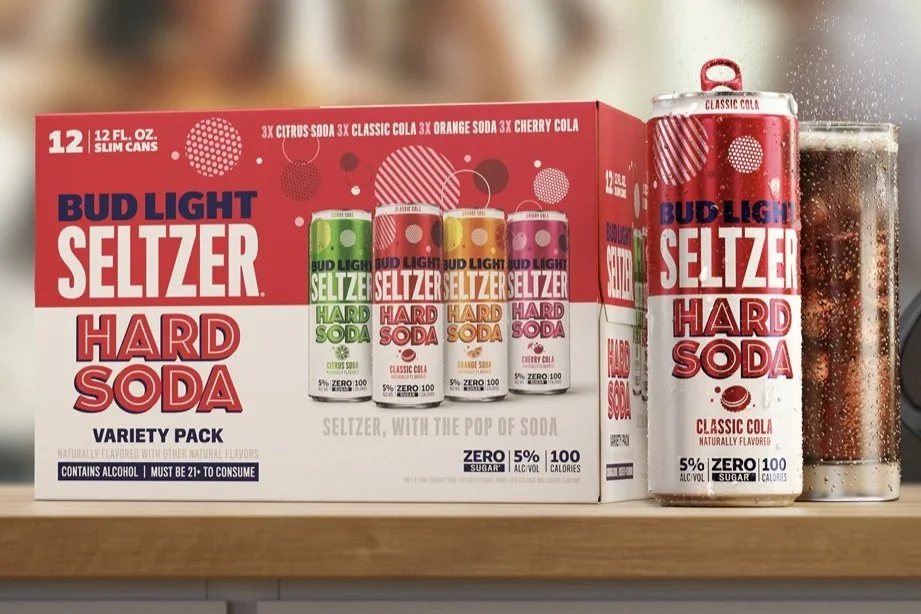
Bud Light, a beer company, brand extended to a seltzer, and then to a hard soda. Keep in mind that Bud Light was itself a brand extension. It was weird.
Give the world enough time and something weird is bound to happen. As I was perusing my archives in the way people do on major anniversaries (this blog turned 20 last week), I happened along my post about Bud Light Seltzer Hard Soda. “Man, that was weird,” I thought—and just like that the idea for a post was born.
Scanning the archives, I realized something weird happens more than once a year. I flagged 27 posts that met my impromptu definition of weird, and that was after a mere scan; had I the hours to devote, I could probably unearth another 27. So, in the interest of amusement, if nothing else, let’s stroll down memory lane and marvel. (A decent number of the weird happenings occurred close to home—but I think you’ll appreciate them even if they were less than a blip on your radar at the time.)


For the sake of simplicity, I’ll just trot through these in chronological order. Let’s start back in 2007, when the chief of staff for retiring Portland mayor Vera Katz was running to take her job. The Boston Beer Company took issue with this and sent him a cease and desist letter for using the name of their flagship beer on his website. The candidate’s name was Sam Adams. "They say they've been using this trademark since 1984," Adams said at the time. "I've been using it since 1963." He won the legal fight and the election.
In 2008 and 2009, certain styles were all the rage. For a hot minute, breweries thought Belgian styles would be the next big thing. That … did not pan out. Then for some reason Americans decided that a black India pale ale would be a funny thing. Black pale ales! And then, just because that wasn’t weird enough, Oregon beer nerds demanded that the style be called Cascadian dark ales (which was, admittedly, less absurd), an effort that was sort of successful in Oregon.
Portland once had a beer troll. His name was Doc Wort, and he was kind of a deal in the late aughts. Portland had a decent cadre of bloggers then, and he trolled us all. He had his own blog, now sadly deleted, but his best work was done in the comments of our blogs. He was a big enough deal that he got a profile in the local alt-weekly. Old timers recall him with the kind of affection they reserve for minor diseases and surgeries.
If Cascadian dark ales and Belgian dubbels weren’t enough, one brewery tried selling a braggot. It allowed me to quote Chaucer (“Her mouth was sweet as bra[ggo]t, or the nieth or hord of apples Laid in bey or heth”), but I am sad to report that the potential new braggot sector failed to develop.
We call our city “Beervana,” and like any nickname, it’s part of the cultural trust. We mainly feel like it’s one of those things that should remain in the public domain, free for all to use (as I have, with this blog). Well, a Texas company thought different, and trademarked the word. 😡
Okay, so Belgian ales, black IPAs, and braggot—what else ya got? One trend pursued by homebrewers and ridiculed by the pros (the story has a surprise ending) was “hop bursting,” which was rolling by 2014. That was the practice of skipping kettle hops and using them all post-boil. About a year later, it became a common practice by the pros, who refused to call it “hop bursting.”
Meanwhile, in one of the weirder developments of the era, a small Chicago brewery very briefly found itself in the middle of the cultural zeitgeist for making hard root beer. Not Your Father’s Root Beer was, for maybe four months, the only thing anyone talked about that year. To the youngs out there, no, I am not making this up.
This next item is sad weird. In the middle aughts, a story emerged from New Mexico about a native variety of hop found growing there. Neomexicanus became a fascination with brewers and breeders for the next few years, and led to some commercial releases (Zappa, Medusa), but they were just too wild, even for Americans, which is why you’re not drinking a Zappa-hopped beer tonight.
While we’re in the middle teens, we must recall the start of the weirdest business story of the craft era: that moment when Constellation Brands bought Ballast Point for (Dr. Evil Pinky here) one billion dollars. The story got even weirder when, four years later, that billion-dollar brand, Ballast Point, was sold to a tiny brewery in the Chicago exurbs whose prior claim to fame was their onsite golf simulators. My lede that day: “A two-year-old Chicago concern that touts “great craft beer and golf simulators,” today announced it had purchased Ballast Point. Named Kings and Convicts in honor of its Australian and English founders, the company has 334 Instagram followers.” It was … something. (Miraculously, Ballast Point is still in business.)
For a palate cleanser, we next turn to an incident in 2017 when breweries making spontaneously fermented lambic-ish beers got into something close to a war. Kettle-souring had become an established and common practice, and they were messing with the mixed fermentation breweries’ sales. Trying to highlight how laborious making spontaneous beer was, Jester King proposed calling it “Méthode Gueuze,” sparking the first of the contretemps. Belgian lambic-makers didn’t like that, so Jester King proposed Méthode Traditionelle and Méthode Traditionelle 3-Year, and that didn’t go over too well with the Americans. Given how small the market for mixed fermentation beers is today—Jester King makes IPAs—the heat of this battle contains more than a hint of melancholy naïveté.
In another local story, we had the unexpected case of the City of Portland attempting to prevent a local brewery from using its own trademark—so that Anheuser-Busch could use it instead. I was pleased to play a small role in the imbroglio, writing the linked post above that helped shine a light on the mayor’s offices. It wasn’t long before the city backed off, full of shame and regret. Ah the cleansing effect of transparency!
I’ll try to fold some of the next few stories into a single item. As the teens wore on, breweries got ever more experimental. This led to the glitter beer craze of 2018 (which I attempted, unsuccessfully, to fan), the revelation that breweries were starting to use food-science additives in their pastry and smoothie beers, and the excesses of a winery-made $90 six-pack of pilsner. This era was defined in part by the actual craze of seltzer and, which led to the inevitable devolution into that Bud Light Seltzer Hard Soda you see at the top of the post. Remind me, how did that product launch go?
Somewhere along the way, Stone Brewing opened, and then famously walked away from, their big Berlin brewery. (Denouement, Monday: that brewery is on the blog as its inheritor, BrewDog, was sold for scrap to Tilray.) in other Stone news, the brewery also successfully sued Keystone Beer for trademark infringement.
There’s an old phrase that “all politics are local,” and it’s true with beer, too. We saw that in 2022, in the midst of Covid, when the state of New Jersey went insane and attempted to crush its own brewing industry. It is a tale straight from a Sopranos episode, with the powerful tavern lobby acting as mobsters, and I still can’t believe people would run a state like that.
Did you know that there are two Kona Breweries in the United States? They have the same packaging, the same beers, the same motto, and they are completely separate entities. They are Konas, and in 2023 I wrote about them.
Okay, just two more! First, also in 2023, there was that incident in which Bud Light (or more likely one of the PR firms working for it) sent a bespoke six-pack to a transgender influencer on Instagram. You remember—half the country went insane and Bud Light lost massive volume, and it became an excuse to hammer poor Dylan Mulvaney, who absolutely did not solicit any of it? Yeah, that really happened. Not only did Bud Light cease being the best-selling beer in the land, but in a development I would have never believed, a Mexican beer—honestly, a much tastier one—took over the top spot, albeit briefly.
That brings us more or less up to the present, with this final item—and it’s a banger. The story actually starts in 2023 when an American icon, Anchor Brewing, shuttered its doors after a century and a quarter. All is lost, yes? No! About a year later, yogurt magnate and billionaire Hamdi Ulukaya purchased it “lock, stock and barrel, [including] its square-block factory on Potrero Hill, its West German-made brewing equipment, and the brewery’s intellectual property.” Oh joy! The brewery is saved! But then, nada. A year goes by. Not only does Anchor not open, but neither Ulukaya nor any of his team utter a peep about the brewery. But one thing is clear—the damn thing is definitely not opening. Add another six months, and rumors start dribbling out that acknowledge what seemed to be obvious: Anchor ain’t reopening.
As to what Ulukaya was doing all that time, or why he even got involved in the first place—that weirdness yet remains to be exposed. Perhaps in another decade or two, I’ll run another of these posts and we’ll have the rest of the story then.