When Acquisitions are Good: Schneider Buys Weltenburger
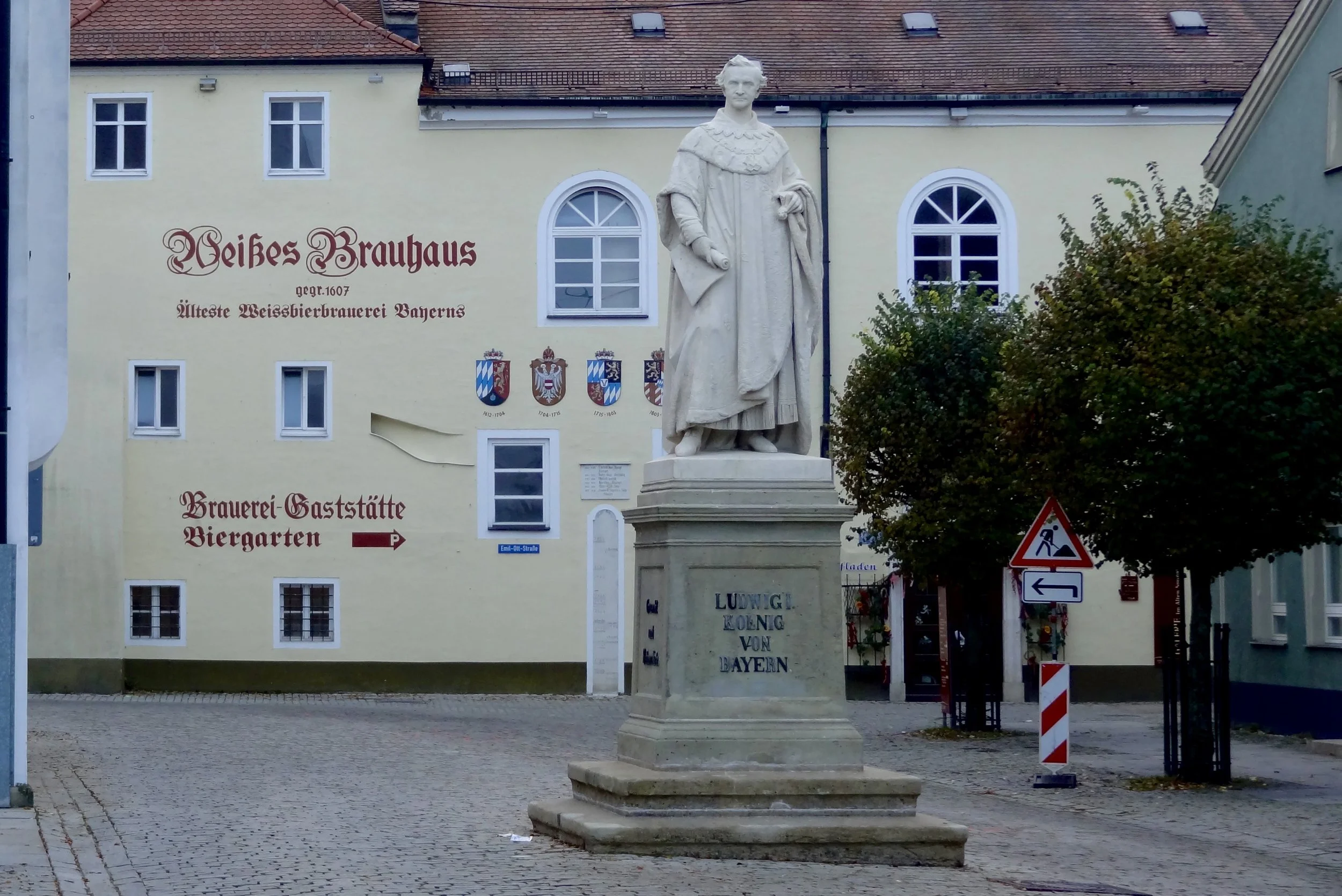
Schneider’s historic brewery.
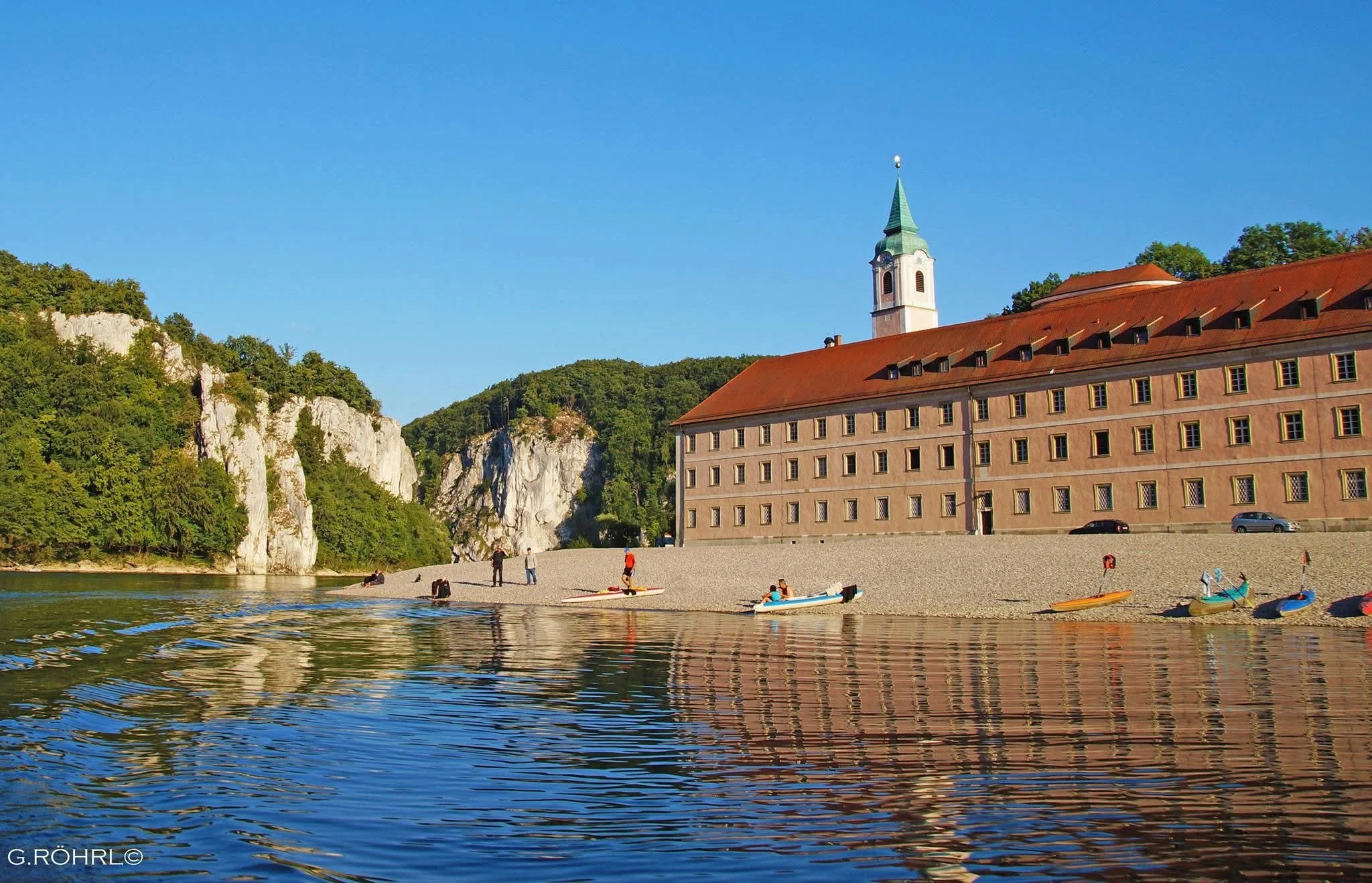
Photo courtesy Klosterbrauerei Weltenburg
Some big news from Bavaria broke last week, involving two of Europe’s most historic breweries:
“The world’s oldest monastic brewery, Germany’s Weltenburger, is being sold to the Munich brewers Schneider Weisse… Beer has been brewed at Weltenburg Abbey, a stunning, still active monastery on the banks of the Danube in Bavaria, for nearly 1,000 years. Although the facility is still owned by the Catholic church, the Benedictine monks handed over production of the brand’s award-winning lager and signature dark brews half a century ago to hired staff from the Bischofshof brewery, which will also be sold to Schneider.”
Although the Trappists get more attention for their brewing activities, the Benedictines have the greater claim of brewing lineage. Weltenburger has a long tradition of brewing dating possibly to 1050. Dating breweries is an existential sinkhole, but we can assume monks have been brewing off and on in that bend of the Danube for many hundreds of years. Monks have been active at the site since 617, and by the tenth century Weltenburg came under the authority of the Bishop of Regensburg, where it remains. How much of that time monks have been making beer is likely unknowable, but it doesn’t really matter: it’s an incredibly old, historic, and sacred site. Losing the brewery would have been an irreplaceable loss to the world’s brewing heritage.
And the beer’s good, too! Its helles and dunkel lager have both won tons of awards. I can attest to the quality of the latter: Weltenburger Barock Dunkel is my favorite dunkel made in Germany. Outside of Germany, people may know Weltenburger for its silky doppelbock, Asam. In other words, its value lies not solely in its age or monastic connection. The beer is superior as well.


The trouble, of course, is economic. Here’s how Weltenburger put it in their press release announcing the deal:
“The background is the drastic decline in sales of German breweries at home and abroad for years,” said Till Hedrich, Managing Director of Bischofshof and Weltenburger. “In the last ten years alone, the industry has lost almost 14 million hectoliters and thus almost 14 percent of its sales (2015: 95.6 million hectoliters; 2025: 82.6 million hectoliters). And the trend is unbroken: in the last 15 months, according to the Federal Statistical Office, sales were always below those of the previous year. The fact is, on our own, it was no longer possible to continue to operate the brands economically despite all the efforts and good course setting the last few months.”
Bringing Schneider into the mix was the perfect solution. Located just eight kilometers from Kelheim, Schneider is Weltenburg’s neighbor. A family-owned brewery founded in 1872, Schneider has its own incredible history of keeping traditions alive. There’s a very good chance none of us would be enjoying hefeweizens today if Georg Schneider had not spent 17 years in the mid-19th century trying to change Bavarian law. For centuries, the right to brew weissbier came through royal decree. Georg managed to get Bavarian King Ludwig II to end the law and let anyone brew weissbier. The style was dying out and wasn’t providing any revenue to the king, anyway. So Ludwig agreed, in 1872, and Georg promptly founded his brewery. Today Georg Schneider VI owns and oversees the company and his son, Georg VII heads the brewing team. Weissbier is alive and well.
The future is never certain. One of the brewing gaps in Weltenburg came after the Napoleonic wars, when the monastery was secularized for forty years. You just can’t predict those kinds of things. Wars, economic collapse, or just good, old-fashioned incompetence could do in Schneider and therefore Weltenburger’s brewery. But if you had to place the abbey’s care in anyone’s hands, you couldn’t find anyone close to Schneider. Most brewery acquisitions are bad. This is a delightful exception.