Czech Breweries Understand Presentation
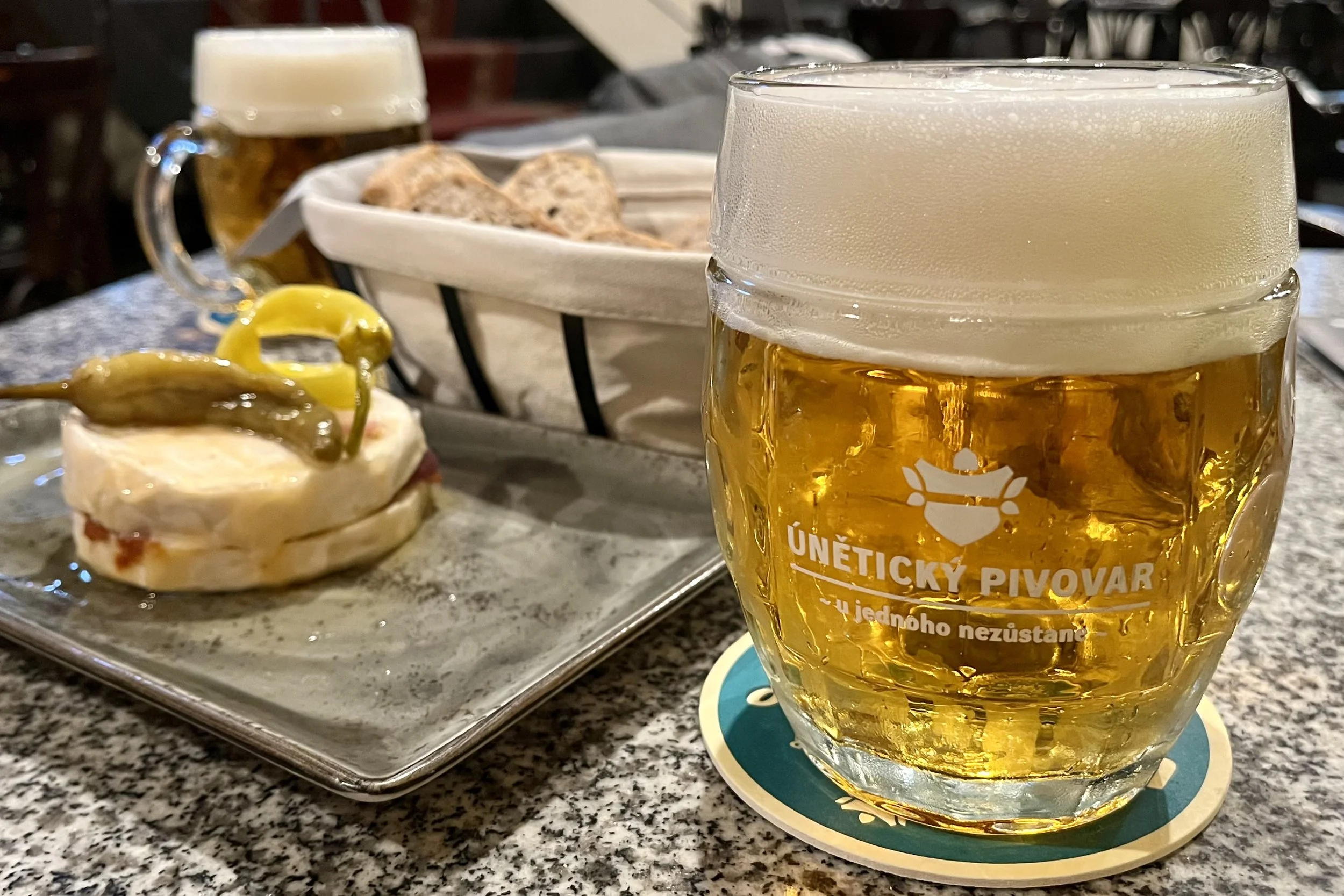
It was inevitable that Americans would discover the Czech faucet, the ball-valve apparatus that delivers heads like you see at the top of this post. Their crème-like appearance is irresistible. Watching servers carry platters of perfectly-poured mugs through a cozy pub is no small part of the reason to go. Every brewery should install at least one of these taps, and I’m not sure why you’d stop there.
Two other elements of Czech draft culture aren’t quite as celebrated, however, and I wonder why. People who go to Belgium are always wowed by the glassware, and rightly so. Belgium’s breweries avail themselves of a number of different vessel shapes, and adapt these to bespoke expressions unique to each brewery. Czech breweries display less range in vessel type—the mug is the standard—but the individual brewery glasses are every bit as beautiful as Belgium’s.
The standard glass is a variation on a Tübinger, a barrel-shaped mug with round dimples. (Square-dimpled mugs came from the British tradition.) It’s a perfect glass for a pilsner because the facets make the light shine through the golden beer like a jewel (again, see above). They’re designed so that the shape, usually a broad band at the top of the glass, perfectly showcases the head. The facets are placed on the lower two-thirds of the glass, where the liquid is. The glassware has been adapted to showcase the kind of heads their faucets create.


Breweries riff on the basic design in many ways. They can use wide, vertical wales, or shape the glass with a more upright posture. One of the Kozel glasses has a cool, open-bottom handle. (Kozel is in the Pilsner Urquell corporate family and you’ll find different versions of their glassware pub to pub.) As in Belgium, breweries often stamp their names on their glasses, but sometimes they emboss their logo directly into the glass. They all have a slightly different feel and that subtly changes the drinking experience.
But wait, there’s more! I’d like you to look at the pictures of the pale lagers I posted here. Do you notice how much deeper in color they are than American beers? Even when they make their low-alcohol, 10-degree beers, they showcase a sparkling golden color. In my recent post about the pFriem-Rahr malt collaboration, we heard a lot about how valuable the lack of color is in a pilsner malt. In both American lagers and increasingly IPAs, breweries are shooting for a straw color. That’s not a brewer-driven choice; it reflects the preferences of customers who seem to have grown allergic to color.
A helles the color of a late-summer hay field is no doubt a tasty-looking beer. But there’s a reason the golden lager of Czechia and Vienna transfixed drinkers across the planet when they were released in the 1840s. Gold is gorgeous. It refracts light beautifully, and add a stream of bubbles and it glitters and shimmers in the glass.
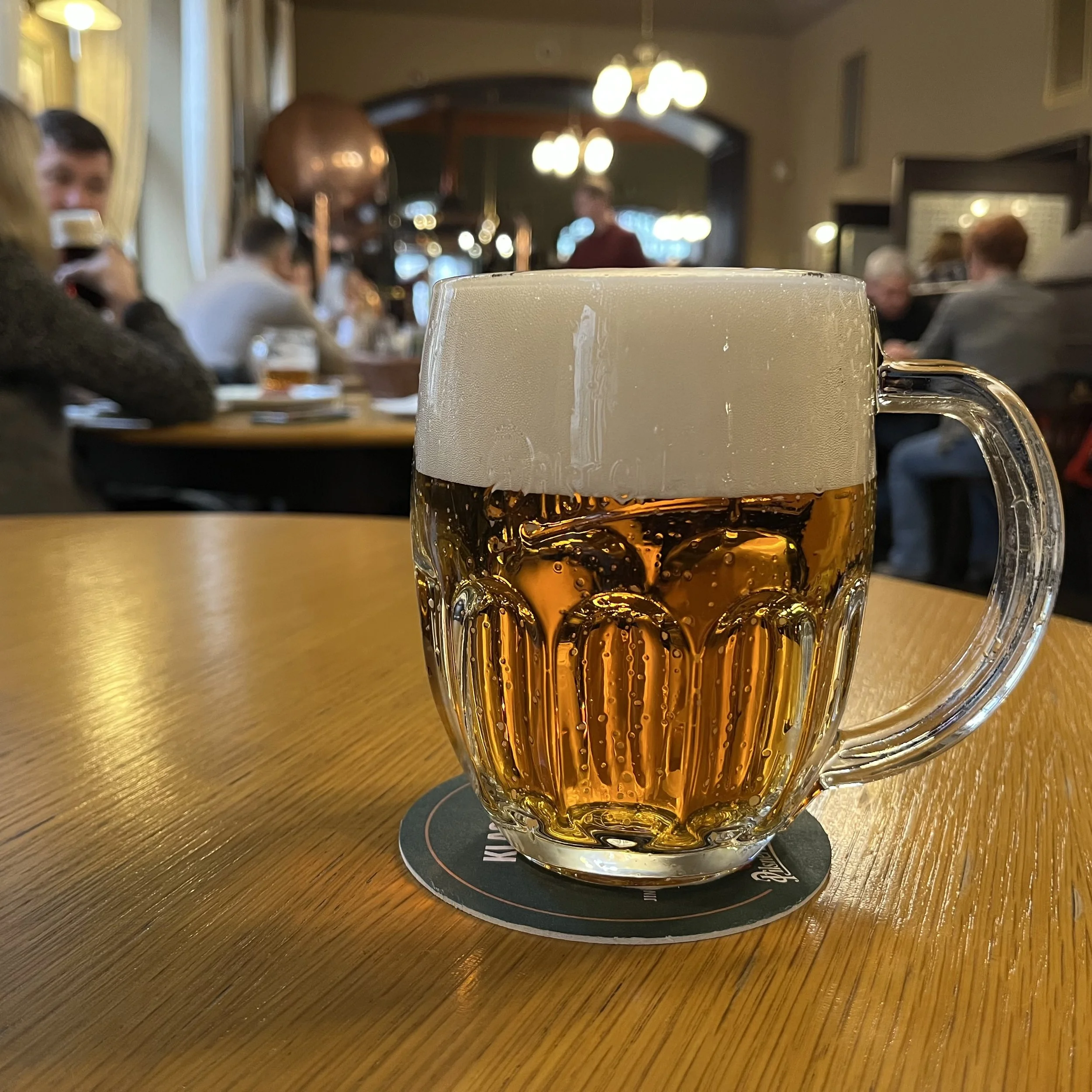
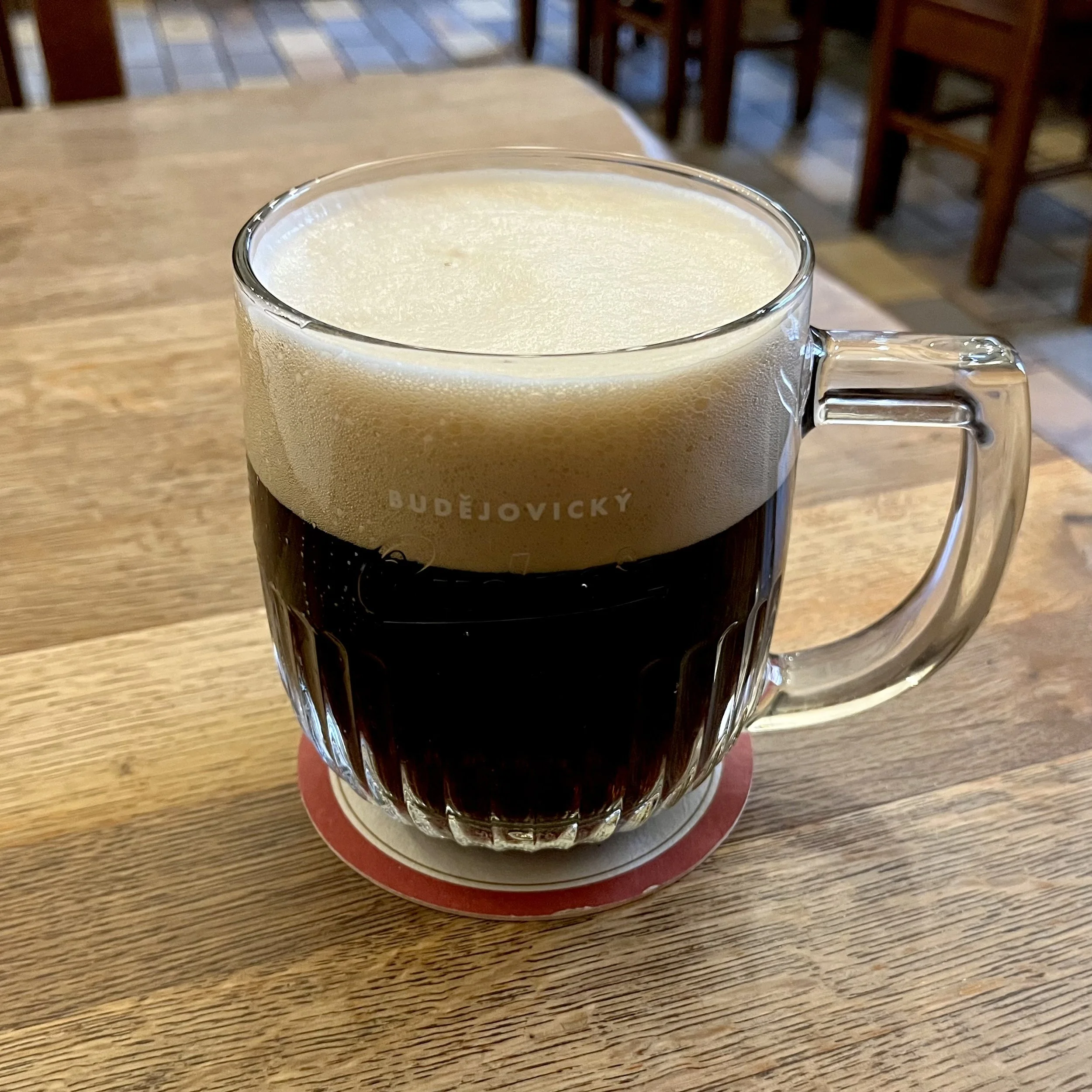
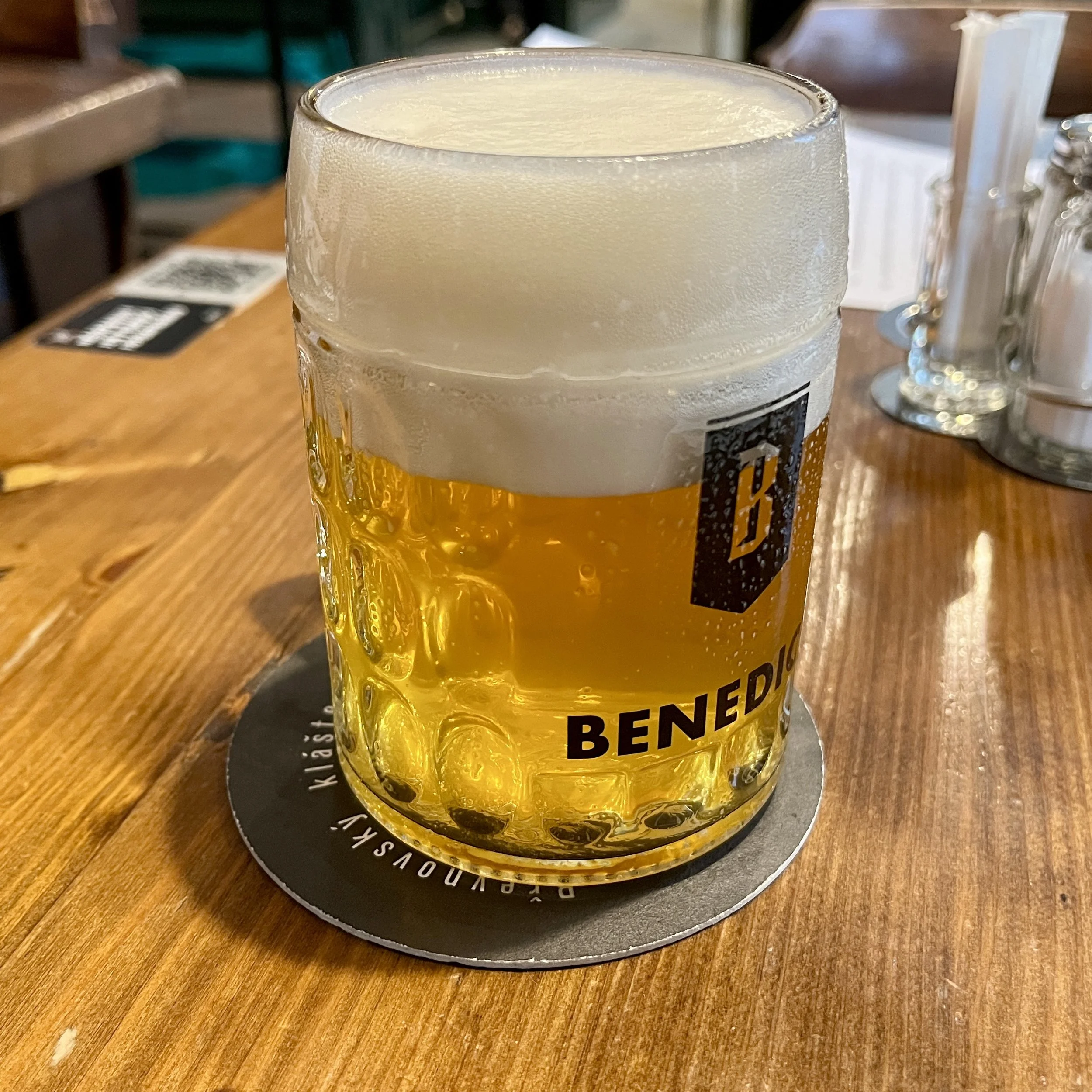

The three elements—glassware, the creamy head, and a deep, golden hue—are part of the Czech presentation. Czechs understand that we drink not just with our tongues and noses, but our eyes, and they make sure every beer is a show. Czechs drink the most beer per capita, and they sell a lot of it over the bar. The beauty of that beer is one reason people like to get down to the pub to drink it.
This is less an implied critique of American brewing than a contrast I can’t help but notice. I do wonder if there’s some wisdom in the Czech approach that Americans might adapt. In any case, there’s nothing quite like a half-liter of frothy Czech beer, and I have a couple more days to indulge.