“Both Are Correct.”
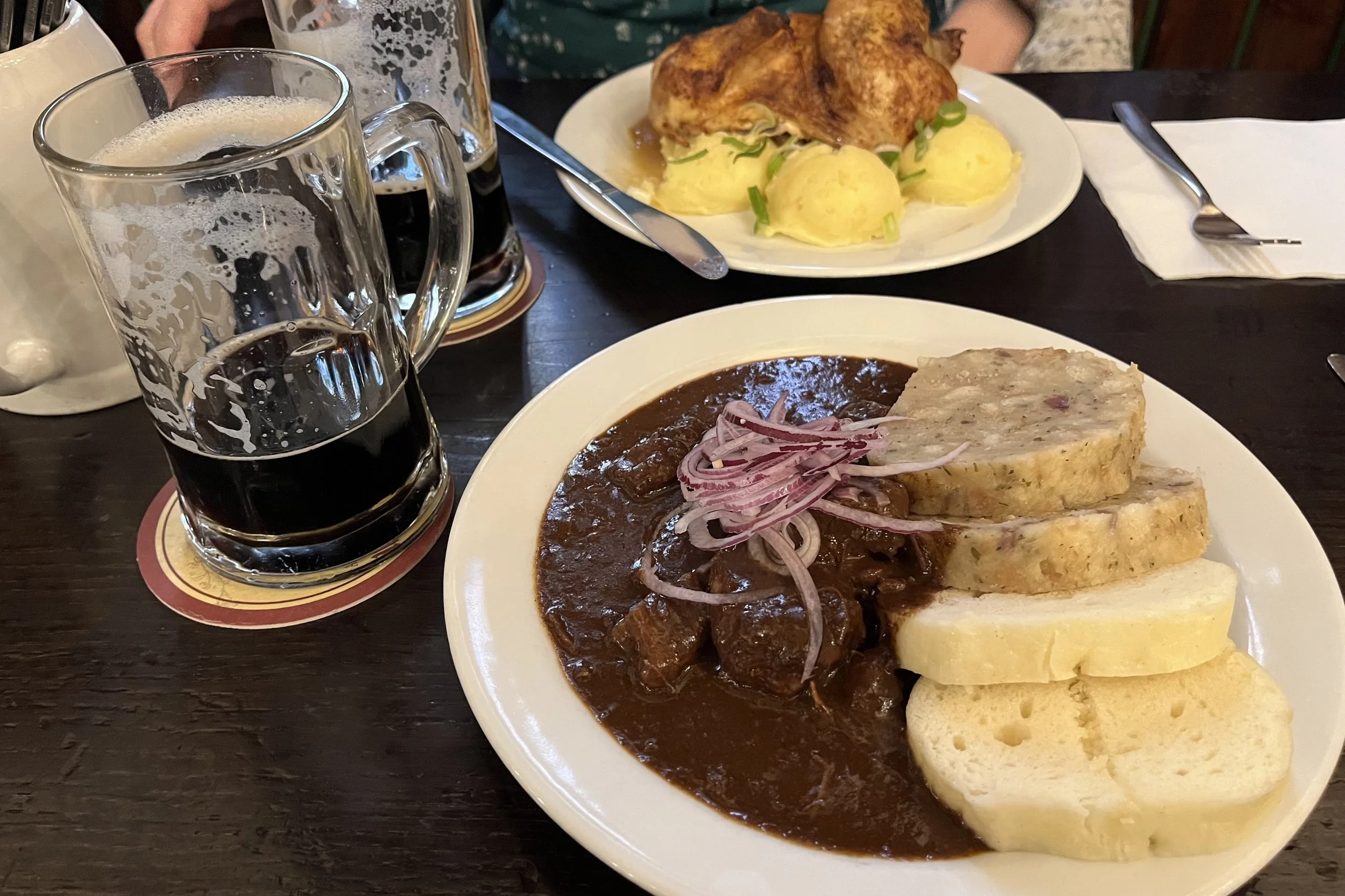
Two or three notes from Prague. We start at U Fleků, about which I have already written fairly extensively, making this more a footnote than anything else. In Czechia, breweries make various kinds of dark lager, which they describe as either dark (“tmavý”) or black (černý). Americans, who see the world through the lens of style, assume this means two styles exist, sort of like brown ale and porter. Or anyway, that was an issue a few years ago.
I am not an expert on Czech beer, but I’ve never found anyone here who believes these terms refer to style, and as if to emphasize the point, our server came to the table and asked (in English) if we wanted pale or dark. We answered dark*, and he immediately turned to a co-worker to pass along this information, saying in Czech, “černý.” (The Czech-language menu described the beers as “tmavé pivo 13°.”) I asked the server about it. Which kind of beer was U Fleků, dark or black? His brow furrowed a little in confusion, wondering what I was trying to ask. After a bit of back and forth he understood and shook his head curtly: “both are correct.”
The lesson I would convey to Americans is that styles, as a concept, are not understood exactly the same everywhere, and Czechia is very good case in point. I don’t know who started calling these beers “Czech dark lager” in the U.S., but it was a good decision. They are a fairly broad category, not a style per se.


A great example of this is the difference between U Fleků’s flagship dark, a rich, full, chocolatey 13° beer of 4.6% and Kozel Černý, a 10°, 3.8% lighter, maltier beer with a distinctive nutty-bready note and a long, roasty finish. Kozel is owned by Asahi and available in some Pilsner Urquell pubs, where if you find it listed in English, it will be called Kozel Dark.
The two beers are dark-colored, but if you tried to group them into a single “style,” you’d have very little else beyond appearance to grab on to. The one thing that shines through to me is the malt mouthfeel, which in both beers was quite a bit heartier than you’d ever guess by looking at the ABV.
___________________
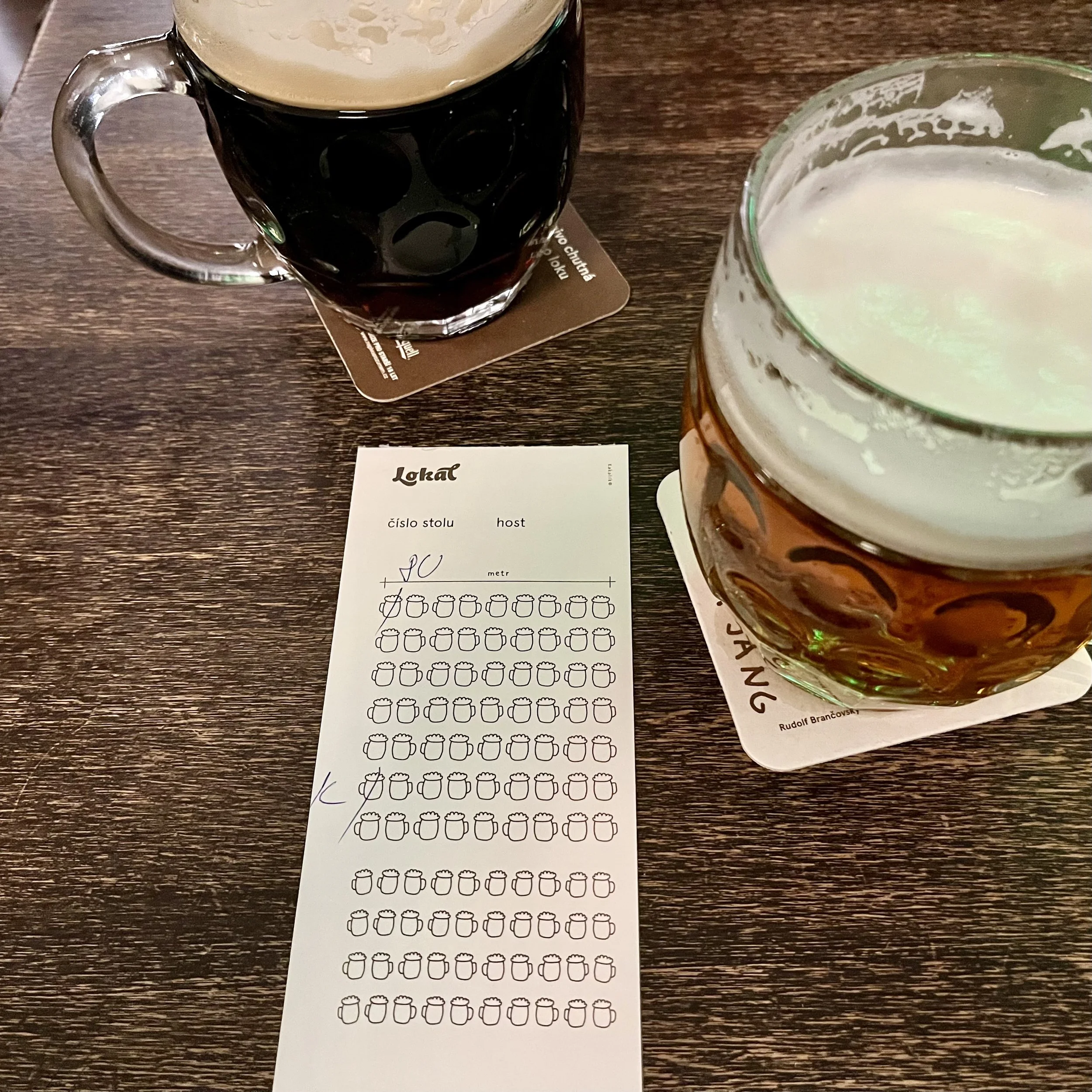
* If you go into U Fleků, for God’s sake order the dark, whatever you call it. This is one of the world’s truly great beers, and until Covid the only beer U Fleků made. The pale is variable; I had an excellent pint two years ago. But it’s like going into a French bistro and ordering a hamburger. Sadly, that’s what the majority of drinkers do, though, as I glanced around. I assume most of them don’t even realize the status of the brewery’s Dark—they just reflexively order a pale lager. The reason to go to that brewery is to have the beer they’re famous for. I had three glasses of the dark for lunch and I can confirm that it only improves over a session. Go to any other brewery or bar in Prague if you want a pale lager.