Why Legacy Breweries Fail
Reader TM sends an email on a subject I’ve been considering for decades, one that is especially relevant now, (edited for brevity):
“Breweries often seem to get stuck with aging brands and obsolete styles. Whether it's Anchor, 21st Amendment, Rogue, etc, it seems to me that craft beer is very subject to changing preferences—it's like drinkers expect constant change. Or is it an oversaturated market, maybe the presence of quality beer in the supermarket?
TM notes that the Rogue case involved many moving parts; they were still selling a lot of beer, though less and less, and so debt was mounting. In recent days we’ve learned that the red ink was actually huge ($16.7 million in liabilities against $4.9 million in assets), so the immediate cause was debt. But unmanageable debt isn’t a cause; it’s a consequence. We could extend the causal chain further backward to falling sales, including 18% in 2024, but again, that’s not the starting point. The real question is why legacy breweries become stale and see sales fall and what causes that. (TM did ask about why breweries get into debt and fail, and I’m just humble enough to recognize when a topic is too far out of my realm of expertise to answer. Feel free to weigh in on that in comments.)


The Legacy Conundrum
“Legacy breweries” are relatively young—dating to the ‘80s or 90s—but they are a product of an incredibly unstable time in American brewing. Most of the breweries from this vintage created flagship beers that spoke to a time long past: Sam Adams (amber lager), New Belgium (amber ale), Deschutes (porter), Harpoon (a beer called IPA that’s not by modern standards), and Sierra Nevada (pale ale). Some of the later breweries in this era did have IPAs, but they came to be seen as dated—see Dogfish Head and Stone. Of course, Rogue was also a charter member of this club, with a heavier and sweeter amber ale.*
These breweries all got pretty big in large part by the success of their respective flagships and in doing so created a lot of loyal customers. When the declines arrived, it dented these flagships’ sales, but we’re still talking about volumes of a single beer that would, on their own, constitute one of the largest craft breweries in the US. So how does a brewery take itself into the future and attract new customers while keeping their loyal fans?
It’s really hard. The number of breweries that have managed to evolve into something other than the legacy of that old flagship brand is very small. Sierra Nevada and New Belgium are really the only examples I can think of. New Belgium did it by sacrificing its former flagship (Fat Tire) and rebuilding around an entirely new brand (Voodoo Ranger). Sierra Nevada’s case is more interesting. They never abandoned Pale Ale nor relegated it to a secondary status. Instead, they continued to search for a second beer that could compliment Pale Ale without displacing it. When Hazy Little Thing found a new generation of drinkers, it strengthened the overall Sierra brand and actually shored up Pale Ale sales.
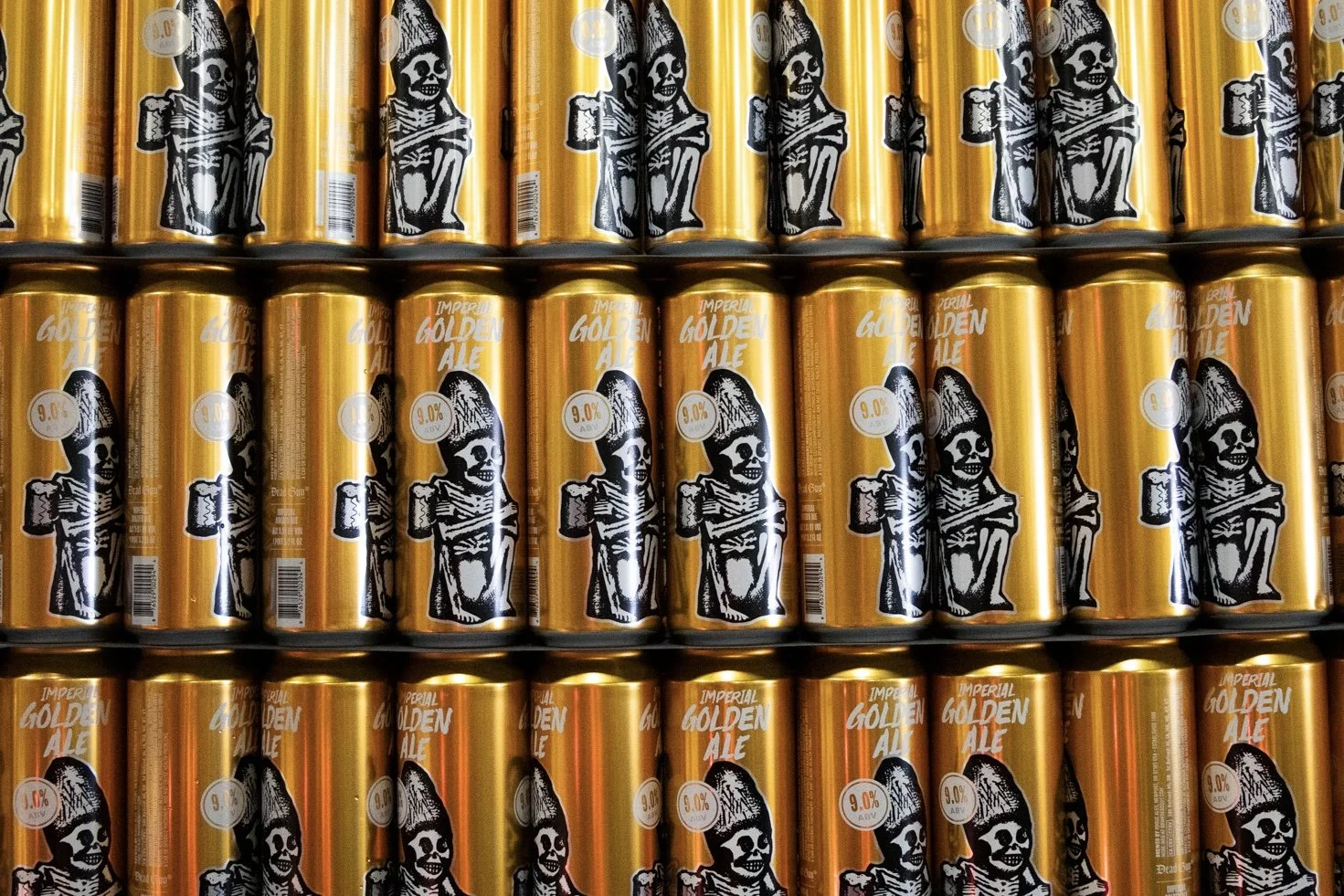
Sierra Nevada seemed to understand that in sacrificing the original flagship, it would wound the brand more seriously than falling sales. When you look around at the other failed or failing breweries, they never managed this trick. Rogue, to take the immediate example, tried to build out Dead Guy into a family, which both supported the core brand and let the brewery plant a foot on the firmer ground of IPAs and pilsners. The move came too late to save Rogue, and it’s hard to know if it would have improved conditions long-term if they’d survived long enough to run the experiment.
Incremental Change Vs. Novelty
One of TM’s comments gets at an important point for this unstable segment of the beer industry: “craft beer is very subject to changing preferences—it's like drinkers expect constant change.” Novelty definitely defined the early decades of craft brewing, along with periods in the later ones, but it has been balanced by a more coherent evolution across craft brewing.
The craft beer segment is a lot more stable now than it was when those first-gen breweries arrived. IPA became the best-selling beer in this category in 2011, and it has only grown in popularity. People constantly complain that they only see IPAs on beer menus, but this is what happens when a culture settles on its preferred style. That has shifted the market in a fundamental way: breweries founded in the past twenty years have either migrated toward hoppy ales or have a model that specializes on other styles for a smaller, niche audience. You have to contend with IPA one way or another, and while we might have more bursts of experimentation like we had in 2014-2019, it’s going to be within the context of the stable, popular styles today, not like the 1980s and 1990s, when drinkers were making an amber lager, a pale ale, a brown ale, and a Belgian witbier America’s best-selling styles.
But we are continuing to see a ton of incremental change within certain styles. Today’s IPAs are vastly different than they were in 2011. In the next week or ten days I’ll have an exploration of one of these very important older IPAs, Deschutes Fresh Squeezed. When it debuted, right around the time that IPAs were taking over craft beer, it represented an important incremental step forward in hoppy ale evolution, from bitter and piney to sweet and tropical. But a decade after its release, it was still an IPA, but one from the past. Deschutes is a great case study in this dynamic: in the early teens, its twin flagships of Mirror Pond and Black Butte were losing sales because they were the wrong style of beer. In the early twenties, Fresh Squeezed was the right style, but an earlier evolutionary example. Deschutes made the change in the early teens by finding a new flagship it could use to charge into the future. Now it has to figure out how to keep that flagship popular among IPA fans who have moved on. (Sierra Nevada will also face this challenge with Hazy Little Thing.)
Future “Legacy Breweries”
Here I think most of the breweries have settled on a similar approach: quiet evolution. Take three Oregon breweries I know well: Breakside, Ninkasi, and Deschutes. All three have older IPAs and all three have freshened them up. Ninkasi’s Total Domination recently got a fairly major overhaul. Their description of the beer duals as a great description of the evolution of IPAs since its launch:
“[Total Domination] is bold remix of the original recipe. Stripped of its conventional constraints, Total Domination Northwest IPA rocks a defiantly lighter shade and body. Stick it to the bitterness, crank up the aroma, and dive into a more balanced brew. Embrace the darkness with a leaner malt character, a kick of extra ABV, and a bone-dry climax. Upgraded hops, malt, and yeast conspire in an underground revolution of modern ingredients and techniques, crafting an edgy brew that defies tradition.”
Leaving aside the PR gloss, they hit the major points: Lighter, drier body, balance updated to modern tastes, higher aroma, and an aroma/flavor palate driven in part by modern hop products. Deschutes did something similar in 2022 with Fresh-Squeezed and I’ll have that post soon.
Another case is Breakside, where the flagship IPA has been in constant evolution. At least a decade ago, brewer Ben Edmunds had been tweaking the recipe. In 2014, Breakside wanted to make sure the beer was performing well in the bottle for the 90 days it was on the shelf, and the changes they made immediately paid off with a gold at the GABF. Since then, the brewers have constantly subjected the beer to scrutiny about how well it matches current tastes, making sure it always tastes contemporary. Over the years, I’ve spoken to Ben about what they’ve been doing, and he mentions little changes to the process or ingredients that keep it tuned up. Breakside is now 15 years old, and their IPA is fourteen. A month ago it won yet another award at the GABF.
And this is one of the interesting paradox about that evolutionary process: to keep a beer tasting the same to customers, it has to change. Years ago, Full Sail’s Jamie Emmerson alerted me to this dynamic. He kept getting complaints about the “changes” they’d made to their Amber Ale. But the change was in the taster, not the beer. Palate shift happens in a population, but individuals fail to notice it. As a beer gets further and further from the mean, it stands out to drinkers. At Breakside the brewers had a good handle on IPA’s DNA and how their customers recognize it. They’ve managed to both keep it tasting the “same” to fans of the beer while keeping it current.
This is probably the tack most breweries will take. Styles evolve constantly and inevitably. I used to be surprised to find that the classic, ur-example of a style was often quite unlike the other beers made to that style. Schneider Weisse is dark and phenolic; Pilsner Urquell is under-attenuated and often kissed by diacetyl. As much older beers, they have become iconic and managed to transcend the same problems that doomed Full Sail Amber. But regular beers made to a style do evolve with it. Bavarian lagers are drier and lighter than they were fifty years ago. Belgian ales spent the twentieth century going from dark to pale. And American IPAs have gone from bitter and malty to pale, dry, and aromatic. They won’t stop here, either, and the market will follow wherever they lead.
So to return to TM, I’d say that the legacy breweries struggling today have a unique challenge posed by the young craft beer segment, one that breweries founded in the past twenty years won’t have. But all breweries will be confronted with the challenge of incremental change and how to manage it. Drinkers will periodically express interest in novel styles and innovation, but the overall market will be more stable and breweries will have to attend to their flagships.
* In all the Rogue commentary, I never mentioned one interesting quirk in the story. If you ask a drinker outside the Pacific Northwest about Rogue, they will invariably cite Dead Guy. In Oregon, that beer wasn’t the main focus. Even by the time it came out around ‘93, it wasn’t where the local market was. People here will cite Rogue’s variety and a favorite beer or four—but rarely Dead Guy. That whole thing was another challenge for the brewery.